 ETB
 KES - Kenya
 UGX - Uganda
 TZS - Tanzania
 RWF - Rwanda
 NGN - Nigeria
 ZAR - South Africa
 USD - Zimbabwe
 GHS - Ghana
 ZMW - Zambia
 USD - International

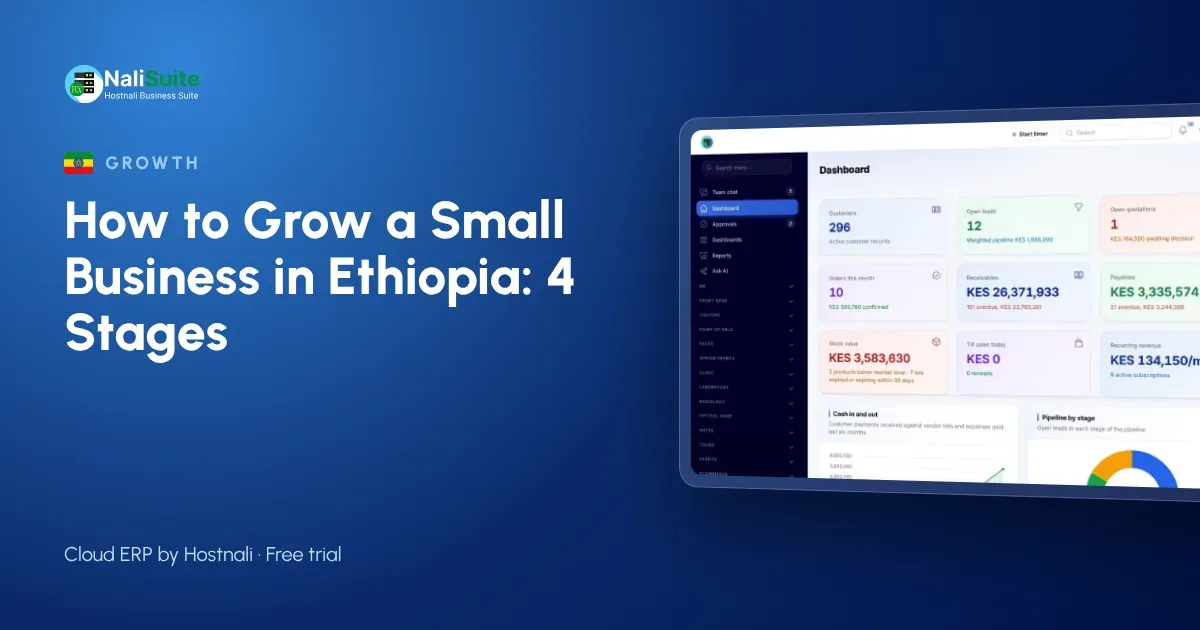
Every growing business in Ethiopia passes through recognisable stages. A trader in Merkato, a café in Bole and a small manufacturer in Adama may sell very different things, but the challenges at each stage are strikingly similar. Knowing which stage you are in tells you what to focus on, and what to leave for later.
Stage 1: The owner does everything
What it looks like. You take orders, buy stock, serve customers, collect money and keep whatever records you keep. The business is your time.
What to focus on.
- Find out what sells. Track sales by product, even in a notebook. Within a few months you will see which items earn the most.
- Get your first loyal customers. Repeat customers are the foundation. Learn their names and what they buy.
- Separate business money. Keep business cash and accounts apart from household money so you can see whether you are making a profit.
- Price properly. Include transport, packaging and your own time in what each product costs you.
What to leave for later. Expensive marketing, big premises and complicated software.
Stage 2: The first employees
What it looks like. You hire one or two people to help with sales, deliveries or production. Suddenly you are a manager as well as a seller.
What to focus on.
- Write down how tasks are done. Taking an order, receiving stock and closing the day’s cash should each have simple written steps.
- Give each person clear responsibilities. Overlapping roles lead to mistakes and blame.
- Keep cash under control. With more hands touching money, daily cash-up and receipts matter. A point of sale records every sale and keeps working offline when the connection drops.
- Pay people correctly. NaliSuite does not claim a statutory payroll pack for Ethiopia, so set up your own deductions in payroll together with your accountant.
Stage 3: A real team and steady demand
What it looks like. Five to fifteen people, regular customers, perhaps some business clients who buy on credit. The owner is busy coordinating rather than selling.
What to focus on.
- Follow every lead. Enquiries come from walk-ins, phone calls, Telegram, WhatsApp and your website. Record each one in a CRM, which also creates leads automatically from website forms, WhatsApp and calls, so none are forgotten.
- Invoice and collect promptly. Business customers pay faster when invoices are clear and arrive on time. Online payments let customers pay through your own payment provider.
- Know your stock. Inventory updates with every sale and purchase and suggests what to reorder.
- Keep the books current. Monthly figures help you spot problems early. Confirm VAT and other tax rules with the Ministry of Revenues, and keep TINs on invoices where required.
Stage 4: More than one location
What it looks like. A second shop in Hawassa, a branch in Bahir Dar or a separate warehouse. The owner can no longer see everything personally.
What to focus on.
- One system for all locations. Stock, sales and cash for every branch should be visible from one place. Multi-company and branches keeps each branch’s figures separate while showing the whole business.
- Branch managers you trust. Give them clear targets, their own logins and regular reviews.
- Standard processes. Every branch should take orders, receive stock and close the day the same way.
- Transfers between locations. Track stock that moves between the warehouse and shops so nothing goes missing.
How to tell which stage you are in
| Question | Stage |
|---|---|
| Does the business stop when you stop? | 1 |
| Do you have staff but still make every decision? | 2 |
| Are you mainly coordinating people and customers? | 3 |
| Do you run, or plan to run, more than one site? | 4 |
Many businesses sit between two stages. Work on the earlier one first.
Common mistakes when moving between stages
Hiring before processes exist. New staff without written steps will do things their own way, and quality suffers.
Opening a branch before the first one runs without you. If the first location still needs you every day, a second one will stretch you too thin.
Ignoring records. Growth makes records more important, not less. Lenders, investors and tax authorities all want clear figures.
Forgetting customer data rules. As you collect phone numbers and emails, the Personal Data Protection Proclamation No. 1321/2024 applies. Only send marketing to people who agreed.
An Ethiopian example
A spice and coffee seller in Dire Dawa started alone at a market stall (stage 1). She tracked which blends sold best and focused on those. She hired two relatives to pack and deliver (stage 2), writing down how each blend was mixed and weighed. Hotels and cafés began ordering regularly (stage 3), so she started issuing proper invoices and tracking who owed what. Today she is considering a shop in Addis Ababa (stage 4), and the written processes from stage 2 are what make that possible.
Frequently asked questions
How long does each stage last?
It varies widely. Some businesses move quickly; others stay at one stage for years by choice.
Do I need software at stage 1?
Usually not. A notebook or spreadsheet is fine. Software becomes valuable at stages 2 and 3, when staff and stock grow.
What does NaliSuite cost?
Plans start from ₵25 a month, with all 17 apps on every plan and a free trial.
Does NaliSuite fit my industry?
See the industries hub.
Try NaliSuite
Work out your stage, then start a free trial of NaliSuite to put the right systems in place for the next one.