 ETB
 KES - Kenya
 UGX - Uganda
 TZS - Tanzania
 RWF - Rwanda
 NGN - Nigeria
 ZAR - South Africa
 USD - Zimbabwe
 GHS - Ghana
 ZMW - Zambia
 USD - International

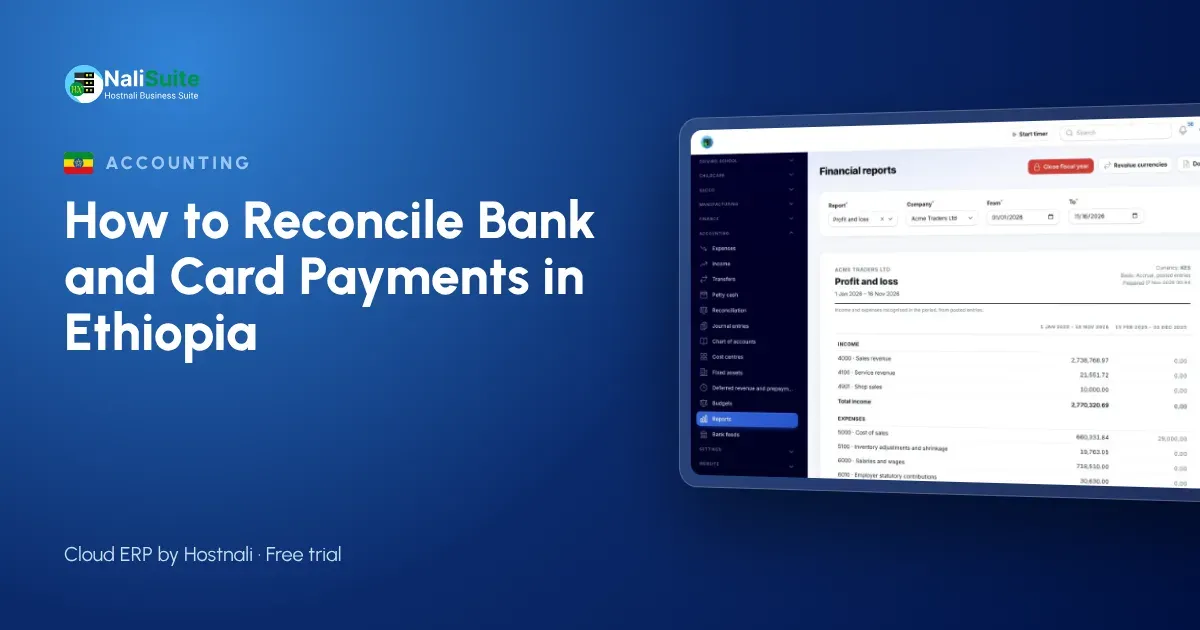
Many Ethiopian businesses still keep receipts in one place, bank slips in another and the sales book in a third. Reconciliation brings them together: it checks that every birr shown on your bank statement is recorded against a sale, a bill or an expense, and that nothing in your books is missing from the bank.
What goes wrong without it
An importer in Adama may deposit cash from several branches into one account, receive transfers from wholesale customers and pay suppliers by cheque, all in the same week. If those movements are not matched regularly, the business cannot tell whether a customer has paid, whether a deposit is complete or whether a cheque has cleared.
The routine, step by step
1. Collect the documents. Get the bank statement for the week from your bank, plus your deposit slips, the list of open invoices and the list of unpaid supplier bills.
2. Match deposits to takings. Each cash deposit should equal the takings recorded for that day or branch. A difference means cash was short, counted wrongly or not yet banked.
3. Match transfers to invoices. Find the invoice behind each customer transfer, by reference where there is one, otherwise by amount and name.
4. Clear cheques and supplier payments. Mark supplier bills paid when the money actually leaves the account, not when the cheque is written.
5. Post charges. Bank service charges and fees are expenses; record them.
6. Agree the balance. Your book balance should now match the bank statement exactly.
Typical differences
| On the statement | In your books | Likely reason |
|---|---|---|
| Deposit lower than takings | Full takings recorded | Cash short or deposited the next day |
| Transfer you cannot place | Nothing | Customer paid without a reference |
| Cheque not yet shown | Bill marked paid | Cheque not yet presented |
| Small debit | Nothing | Bank service charge |
Clean records for the tax office
Reconciled books make it straightforward to support your declarations to the Ministry of Revenues and to show your TIN-registered sales are complete. Check the current filing requirements with the Ministry of Revenues.
Using software instead of a ledger
NaliSuite Accounting imports bank statements and suggests the invoice or bill each line belongs to. Invoices paid through online payment links close on their own. The bank reconciliation feature shows how matching and multi-invoice payments work.
When branches deposit cash late
Branches outside the main town sometimes hold cash for a day or two before reaching a bank. That creates timing differences: the books show the takings on Monday, the bank shows the deposit on Wednesday. Do not treat that as a shortage. Keep a short list of deposits in transit at each reconciliation, with the branch, date and amount, and tick them off when they appear on the statement. If a deposit is still missing after a week, it needs a phone call to the branch manager the same day.
A second example: a Hawassa hotel supplier
A supplier of food and cleaning products to hotels in Hawassa sells on monthly accounts. Hotels pay by bank transfer, often one transfer for the whole month. The supplier sends each hotel a statement listing every invoice, so the hotel pays the total of specific invoices and quotes them in the transfer. When a hotel disputes an item, it pays the rest and the disputed invoice stays open until the query is settled, instead of the whole payment being stuck.
A month-end checklist
- Each bank account reconciled to the statement for the last day of the month.
- Every deposit from each branch matched to that branch’s takings.
- Customer transfers matched to invoices, with disputes noted.
- Supplier payments matched to bills.
- Bank charges recorded.
- Outstanding items listed with dates, so old ones are noticed.
Who should reconcile, and how often
Assign the weekly reconciliation to someone other than the person who deposits cash, and have the owner review the month-end result. Branches with heavy cash sales benefit from a quick daily check of deposits against takings, so a missing deposit is noticed the same week.
Frequently asked questions
Can several branches deposit into one account?
Yes. Record each branch’s takings separately and match each deposit to its branch so shortfalls are easy to trace.
What if a cheque stays uncleared for weeks?
Keep it on the list of outstanding items and follow up with the supplier or bank.
Is daily reconciliation necessary?
For businesses handling a lot of cash, daily matching of deposits is worth it; weekly is enough for the rest.
How do I handle a disputed invoice?
Record the payments for the undisputed invoices and leave the disputed one open, with a note, until it is resolved.
Should I send customers statements?
Yes. A monthly statement helps customers pay the right invoices and raises disputes early.
Try NaliSuite
NaliSuite starts from ₵25 a month with all built-in apps. See the plans.