 ETB
 KES - Kenya
 UGX - Uganda
 TZS - Tanzania
 RWF - Rwanda
 NGN - Nigeria
 ZAR - South Africa
 USD - Zimbabwe
 GHS - Ghana
 ZMW - Zambia
 USD - International

With Addis Ababa growing fast, many Ethiopian families and investors rent out flats, shops and office space. Keeping track of leases, rent, deposits and repairs across several units is easy to underestimate until a dispute arises. These tips will help landlords and property managers keep records that protect both sides.
Know your portfolio unit by unit
A landlord who cannot list every unit and its rent from memory needs a register. Put each property and unit into one place with its current tenant, rent, deposit and lease dates.
Occupancy, income and arrears then add up per unit, per building and across everything you own, without manual totals.
Deposits held, deposits settled
Deposits cause more disputes than rent. Record how much was received, when and how, and keep it visible on the tenant’s account for the whole tenancy.
At move-out, settle the deposit against any unpaid rent or agreed damage on a final statement, so the tenant can see exactly what was deducted and why.
Check-in and check-out records
Write down the state of every room, fitting and appliance when a tenant arrives, and keep photos with the lease. Note the meter readings and the keys handed over.
When the tenant leaves, compare the unit with that record, read the meters again and prepare the final statement with any agreed deductions from the deposit.
From meter reading to invoice
Where you recover water or electricity, record the meter readings for each unit and let the charge flow into that period’s invoice with the readings shown.
Tenants who can see the readings rarely argue about the bill, and they can pay the whole invoice by card or bank transfer in one go.
A worked example: a mixed-use building in Bole
Consider an owner with a mixed-use building in Bole: two shops on the ground floor and ten flats above. Shops pay rent quarterly; flats pay monthly. Electricity is metered per unit, water is shared. When each unit is set up with its own rent cycle and utilities, the owner sees at a glance which tenants are up to date, and every tenant receives an invoice that explains each charge.
Chase arrears early and politely
Arrears grow quietly. Send an automatic reminder a few days before rent is due and another the day after, and look at your arrears list every week.
If your lease allows a late fee, apply it consistently. A tenant who knows the rule is applied to everyone is less likely to test it.
Rent by bank and clear references
Most tenants in Ethiopia pay rent by bank transfer or deposit at the branch. Ask each tenant to quote their unit number, and match every deposit to the tenant’s account the same week.
If you rent to businesses, keep their TIN on the tenant record and issue proper invoices, because business tenants will need them for their own books.
Repairs and the tenant portal
Tenants can report repairs, see their invoices and download statements from a portal, instead of calling you at night.
Every request is recorded against the unit with its status, so nothing gets lost between you, the caretaker and the contractor.
Reports that answer the obvious questions
Who has paid this month? Which units are empty? What did repairs cost this year? Good records answer each in one click.
Owners you manage for receive their own statement, and your accountant gets the figures in the format they need.
Doing it in NaliSuite
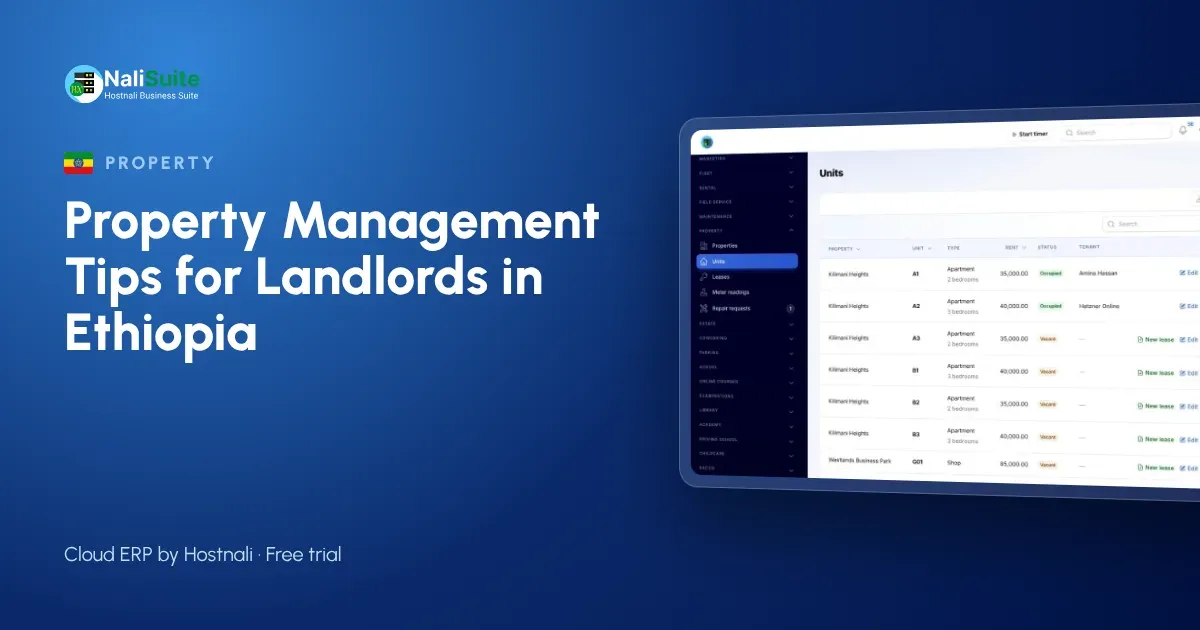
Everything above is what the Property Management add-on in NaliSuite does: units and occupancy, leases and deposits, automatic rent and service charge invoices, meter readings, arrears with late fees, tenant repair requests and landlord statements.
If you also hire out equipment, vehicles or a venue, the Rental add-on handles bookings, deposits and late returns. Payments come in through card and bank, and every invoice and receipt posts to Accounting. The property section shows the full set.
You also hold tenants’ IDs, phone numbers and payment records. Keep them secure and use them only to manage the tenancy, in line with the Personal Data Protection Proclamation No. 1321/2024.
Frequently asked questions
Can shops and flats have different rent cycles?
Yes. Each unit has its own lease and billing cycle, so quarterly shop rent and monthly flat rent run side by side.
Can I share a water bill between tenants?
Yes. A shared bill can be split between units and added to each tenant’s invoice with the share shown.
Is there an extra cost for the property add-on?
Yes. The Property Management add-on is added to any NaliSuite plan and billed with the subscription; plans start from ₵25 a month.
Can I import my existing tenants?
Yes. Tenants, units and current balances can be imported from Excel, so you start with your real figures.
Try NaliSuite
Start a free trial, add one building and its tenants, and let the next month’s invoices go out automatically. See the plans.