 ETB
 KES - Kenya
 UGX - Uganda
 TZS - Tanzania
 RWF - Rwanda
 NGN - Nigeria
 ZAR - South Africa
 USD - Zimbabwe
 GHS - Ghana
 ZMW - Zambia
 USD - International

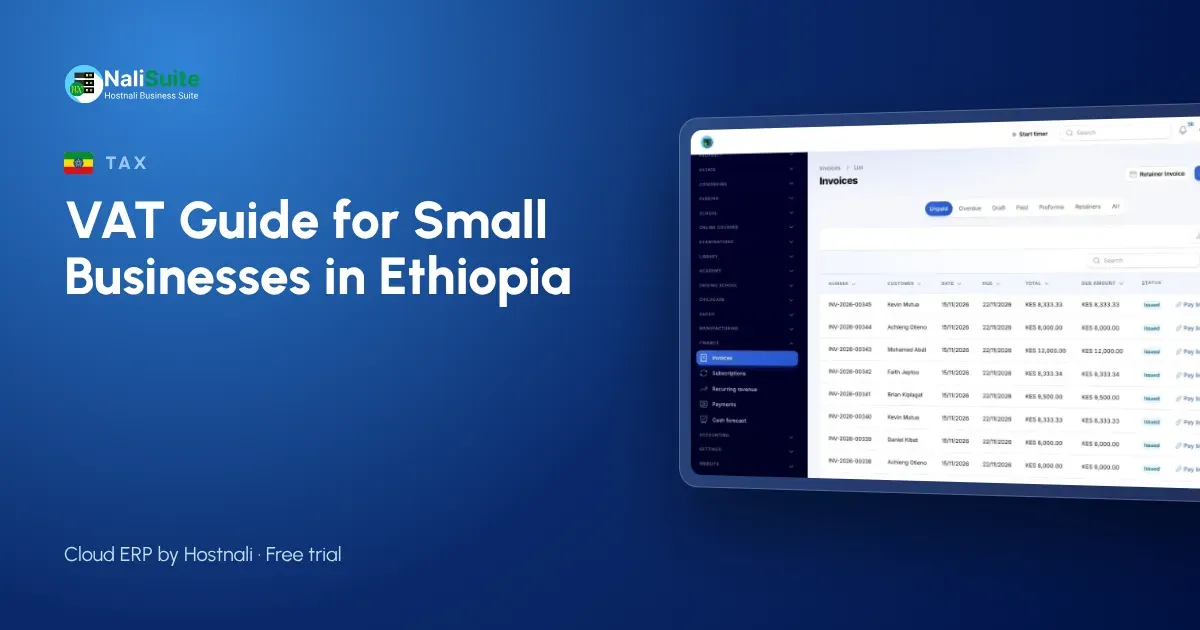
In Addis Ababa, Dire Dawa or Hawassa, a VAT-registered business adds 15% to most of what it sells and reports it to the Ministry of Revenues. This guide covers the calculations, the invoice, the records and the habits that make the monthly return straightforward.
Calculating 15%
Before VAT to after VAT: Br 10,000 × 1.15 = Br 11,500, so Br 1,500 is VAT.
After VAT back to before: Br 4,600 ÷ 1.15 = Br 4,000, with Br 600 of VAT.
The VAT calculator does this for any amount.
Invoices and receipts
Your invoice should show your TIN, a unique number, the date, a description of each item, VAT separately and the total. Ethiopia has rules on cash register machines and approved receipting systems for many businesses, so check with the Ministry of Revenues what you must use. NaliSuite Invoicing produces numbered invoices with VAT per line.
Input VAT
VAT you pay on purchases can usually be deducted, provided you have valid receipts from your suppliers. Importers and manufacturers buy a lot; every missing receipt is VAT you pay twice.
Getting paid
Card and bank payments can be matched to invoices with NaliSuite’s online payments, so each invoice closes when the money arrives and your VAT records agree with your bank.
Records
Keep sales, purchases and payments in NaliSuite Accounting. At month end, the VAT report gives you the totals for your return. Check the filing deadline with the Ministry of Revenues.
A simple checklist
- Every sale has an invoice with VAT shown.
- Every purchase has a valid supplier receipt.
- Bank statements are reconciled before you file.
- The VAT report is reviewed by someone other than the person who entered the invoices.
A worked month for an Addis Ababa importer
A sample importer of electrical goods in Addis Ababa pays VAT at import and charges VAT when it sells to retailers. The VAT paid at import can usually be credited against VAT on sales, with the right documents. Keeping customs documents with the purchase records makes this straightforward.
At month end, the VAT report shows VAT on sales and VAT paid on purchases and imports. The owner checks that every sale has a receipt issued as the Ministry of Revenues requires before filing.
Working with your accountant
Many Ethiopian businesses work with an outside accountant. Invite yours into NaliSuite as a user so they see the same figures you do, instead of receiving spreadsheets by email.
Keep VAT separate
Fifteen per cent of each taxable sale belongs to the tax authority. Setting it aside weekly keeps the monthly return painless.
Second example: a Hawassa restaurant
A sample restaurant in Hawassa sells meals and drinks at the till. Each item carries its VAT treatment, and receipts are issued as the Ministry of Revenues requires. At the end of the day, the till total, the receipts and the bank or card payments should agree; NaliSuite’s point of sale posts the day’s takings to the books when the session closes.
Before you file
- Every sale has a receipt as required.
- Every purchase you claim has a valid supplier receipt.
- Bank and card receipts are reconciled.
- The VAT report matches the sales ledger.
Records the Ministry of Revenues may ask for
Keep sales receipts, invoices, supplier receipts, import documents and bank statements for each period. When questions come, you should be able to show the documents behind each figure. NaliSuite links sales, bills and payments so the trail is easy to follow.
Staff training
If cashiers or sales staff issue receipts, give them a short guide: which items carry VAT, how to add a customer’s TIN and how to handle a return.
When to bring in your accountant
Review your settings with an accountant when you register, when you start importing, and whenever the Ministry of Revenues announces a change. A short check then prevents months of corrections later.
A tidy VAT routine also makes conversations with lenders easier, because your figures can be trusted.
Frequently asked questions
What is the VAT rate in Ethiopia?
This guide uses the standard rate of 15%.
Does NaliSuite replace a cash register machine?
NaliSuite issues invoices and receipts. Check with the Ministry of Revenues what device or system your business must use.
Can I invoice in Birr and US dollars?
NaliSuite supports more than one currency. Check the rules on foreign-currency invoicing first.
Can I claim VAT paid on imports?
Usually, with the right customs documents. Ask your accountant how it applies to you.
Should invoices be in Amharic or English?
Use the language your customer works in, and keep the required details either way.
Should quotations show VAT?
Yes. Showing VAT on the quotation avoids surprises when the invoice arrives.
What if a supplier can’t give me a receipt?
Without a valid receipt you may not be able to claim the VAT. Prefer suppliers who issue proper receipts.
Try NaliSuite
15% VAT on every line, numbered invoices with your TIN and VAT figures each month, from ₵25 a month. Plans.