 ETB
 KES - Kenya
 UGX - Uganda
 TZS - Tanzania
 RWF - Rwanda
 NGN - Nigeria
 ZAR - South Africa
 USD - Zimbabwe
 GHS - Ghana
 ZMW - Zambia
 USD - International

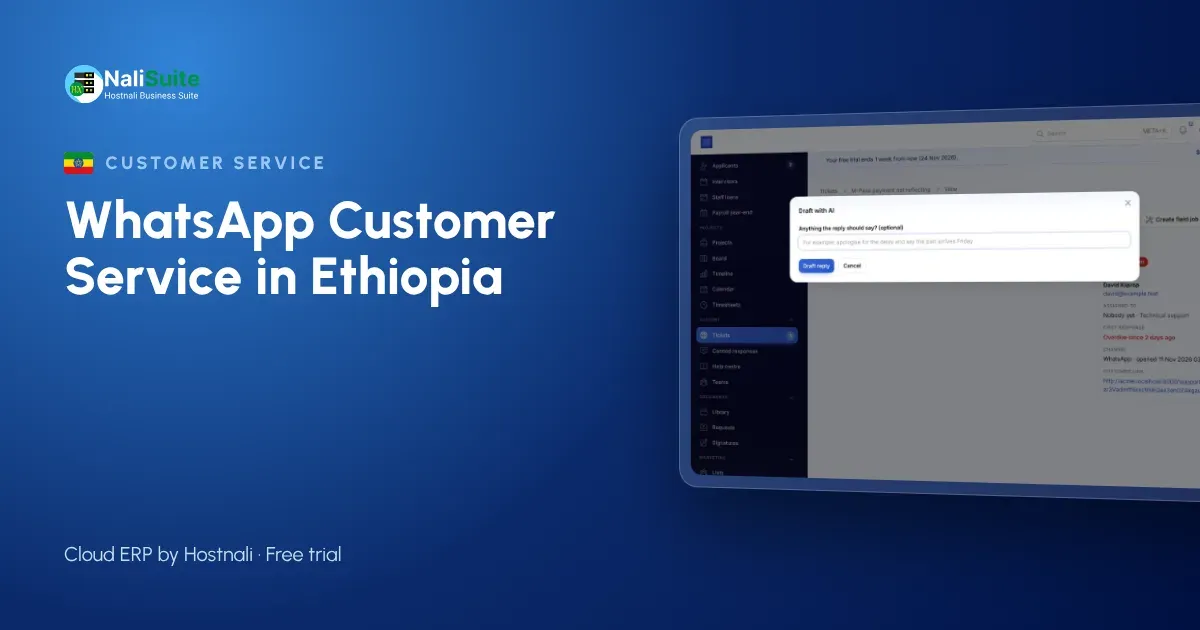
WhatsApp sits next to Telegram as one of the main ways Ethiopian customers reach businesses, especially exporters, hotels and companies that deal with the diaspora. When enquiries arrive in several apps and on several phones, the first thing to suffer is the customer who is still waiting for an answer.
The trouble with one shared phone
Think of a coffee exporter in Addis Ababa that talks to buyers abroad on WhatsApp and to local suppliers by phone. The sales manager handles buyers from her own WhatsApp, samples and contracts are discussed in long threads, and when she travels to Jimma for the harvest, buyers wait days for prices.
The problem is not WhatsApp. It is that the conversations live on a device instead of in the business. Fixing that is mostly a matter of setup and habits, and it does not need a big team.
What good WhatsApp service looks like in Ethiopia
- Every message gets a first reply quickly, even when the usual person is off.
- Any staff member can see the full history before answering, from Addis Ababa or Dire Dawa.
- Prices, stock answers and delivery promises are the same whoever replies.
- The customer can order and pay without leaving the chat, by bank transfer or card.
- Marketing messages go only to people who asked for them.
The tools you need
- A business number on the WhatsApp Business Cloud API, so messages reach a shared inbox instead of one phone.
- Tickets with owners and service levels in NaliSuite Helpdesk, so every chat has someone responsible and late ones are flagged.
- Saved replies and AI drafts, so common answers are fast and consistent.
- Quotes, invoices and receipts that can be sent on WhatsApp, from Sales, Invoicing and the point of sale.
- Opt-in broadcasts from Marketing using approved templates.
Write your “who answers what” rules down, share them with the team and set assignment rules in the helpdesk so each chat lands with the right person, whether it comes from Bahir Dar or abroad.
Send quotes, invoices and receipts inside the chat
The fastest way to close a sale on WhatsApp is to send the document in the same thread. A quotation from Sales can be accepted online, an invoice from Invoicing carries a pay link for bank transfer or card, and the till can send the receipt by WhatsApp. See how it fits together on the WhatsApp feature page.
Broadcast only to customers who said yes
Promotions work on WhatsApp, but only for customers who opted in. Use approved message templates from Marketing, send them to your opted-in list and make it easy to stop. Customers in Ethiopia quickly block numbers that spam them.
Common questions from teams getting started
Will customers notice the change? Not in a bad way. They write to the same number; they just get answers faster and from whoever is free, in Addis Ababa or anywhere else.
What about voice notes and photos? They arrive in the ticket like any other message, so a colleague can listen to a voice note from a customer in Dire Dawa or see a photo of a damaged item without asking for it again.
How do we hand over between shifts? Open tickets stay open with their owner and history. The next shift sees exactly where each conversation stands.
Can managers see how the team is doing? Yes. Reply times and open tickets per person show who needs help, and which questions should become quick replies.
Turning chats into repeat business
Every WhatsApp conversation linked to a customer record builds a history: what they bought, what they asked about, what they complained about. Over time that history lets you follow up at the right moment, for example reminding a customer in Hawassa when a product they asked about is back in stock, or sending an opted-in offer to customers who bought in the last three months. The CRM and contacts apps keep that history in one place.
WhatsApp service in Ethiopia: what to keep in mind
Many Ethiopian businesses use Telegram as well as WhatsApp. Whatever mix you use, keep the business conversations in one system with the customer record, so a colleague can pick up any chat. For customers abroad, invoices sent in the chat can carry a pay link for card or bank transfer through your payment provider.
Ethiopian exporters and hotels often deal with customers in several time zones and in Amharic and English. Keep quick replies in both, note the customer’s time zone on the contact record and assign overnight messages to whoever starts earliest in Addis Ababa. Buyers abroad judge a supplier quickly on how fast and how professionally it replies.
Frequently asked questions
We also use Telegram. Does that matter?
NaliSuite’s helpdesk connects to the WhatsApp Business Cloud API, email, web forms and social media. Keep Telegram for what it does well, but move customer service to channels your whole team can see.
Can we send quotes to buyers abroad on WhatsApp?
Yes. Quotations go out on WhatsApp in the customer’s currency where you set a price list for it, and buyers accept them online.
Do I need the WhatsApp Business API?
Yes, to share one number across a team you connect it through the official WhatsApp Business Cloud API. Our team can help a Ethiopian business set it up.
Can several staff answer at the same time?
Yes. Messages arrive as tickets in the helpdesk, so several people can answer different customers from one number, each with the full history.
Try NaliSuite
NaliSuite brings WhatsApp, helpdesk, sales, invoicing and online payments into one cloud ERP, from ₵25 a month. Start a free trial from the plans page and connect your business number.