 GHS
 KES - Kenya
 UGX - Uganda
 TZS - Tanzania
 RWF - Rwanda
 NGN - Nigeria
 ZAR - South Africa
 USD - Zimbabwe
 ETB - Ethiopia
 ZMW - Zambia
 USD - International

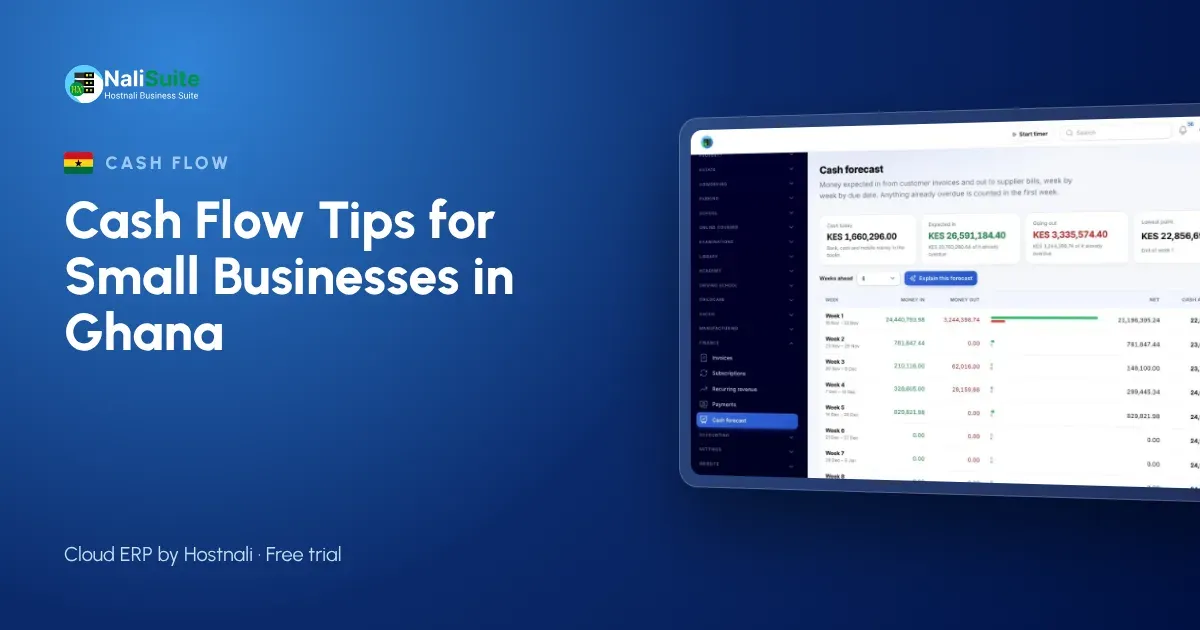
Ghanaian traders know that sales can be strong while the till is empty. Goods go out on credit to regular customers, the MoMo balance is swept to pay suppliers, and by the end of the month there is no clear picture of where the money went. These tips focus on the habits that keep cash moving in the right direction.
Keep a cash diary for one month
Before changing anything, record every cedi in and out for four weeks: MoMo receipts, bank transfers, cash sales, supplier payments, transport, rent and personal withdrawals. Most owners discover at least one leak, often personal spending mixed with business money.
Separate business and personal money
Use one MoMo wallet and one bank account for the business only. Pay yourself a fixed amount instead of taking money whenever you need it. It is the single biggest improvement many small businesses can make.
Sell on credit with care
- Give credit only to customers with a payment record.
- Agree a due date and write it on the invoice.
- Remind on the due date; most late payers simply forget.
- Use a MoMo pay link on invoices so customers can pay in seconds.
Buy stock in step with sales
Buying in bulk feels cheaper, but money tied up in stock for months is expensive. Use your sales records to reorder fast sellers regularly and in smaller amounts. NaliSuite Inventory shows which products are moving.
Set aside tax as you go
If you charge VAT or deduct PAYE, the money belongs to the GRA. Move it to a separate account when you receive it.
Check the numbers weekly
Each week, compare what customers owe with what you owe suppliers, and check your MoMo and bank balances against your records. Our guide to reconciling MoMo and bank payments in Ghana shows how.
Example: a Tamale agro-dealer
An agro-dealer in Tamale sells seeds and fertiliser on credit to farmers who repay after harvest. To keep cash moving, the dealer limits credit to farmers with a good repayment record, takes part payment at planting, sends reminders by MoMo request as the harvest comes in, and buys stock for the next season only after most of the last season’s credit is collected.
A second example: an Accra fashion designer
A designer in Accra makes made-to-measure outfits. Clients used to pay only on collection, so fabric and tailors were paid from the designer’s savings. Now every order needs half the price by MoMo before fabric is bought, the balance on collection, and orders that are not collected within a month are offered for sale. Cash now arrives before costs, not after.
Ghana cash flow checklist
- Business wallet and bank account kept separate from personal ones.
- Deposits taken on custom orders.
- Credit only for customers with a good record, with a limit.
- Reminders sent on the due date.
- Stock reordered in line with sales.
- VAT and PAYE set aside for the GRA.
- Cash reviewed every week.
Your first week of better cash flow
On Monday, separate the business MoMo wallet and bank account from personal ones. On Tuesday, list every customer who owes you and when they were due. On Wednesday, send reminders, with a MoMo pay link, to everyone overdue. On Thursday, walk through your stock and mark items that have not sold for three months. On Friday, write a simple forecast for the next thirteen weeks and note the tightest week.
How NaliSuite helps
Invoicing sends invoices and reminders with pay links, Inventory tracks stock and Accounting shows what you owe and are owed in one view. Weekly reviews take minutes instead of an afternoon.
Frequently asked questions
How much should I pay myself?
A fixed monthly amount the business can afford, reviewed every few months, is better than irregular withdrawals.
What if a big customer always pays late?
Ask for a deposit on new orders and pause credit until older invoices are cleared.
Can I see all this in one place?
Yes. NaliSuite shows unpaid invoices, stock and balances together.
What deposit should I ask for?
Enough to cover the materials and direct costs of the order; many small businesses ask for half.
What if a customer never collects an order?
Agree in advance how long you will hold it, so you can resell it or keep the deposit to cover costs.
How do I stop personal spending from the business wallet?
Pay yourself a fixed amount on a fixed day, and record any other withdrawal as a drawing so you can see the total.
Are MoMo payments enough for cash flow planning?
They are a big part of it, but include bank, card and cash receipts too, so the forecast reflects all your income.
How do I keep stock from tying up cash?
Reorder fast sellers in smaller amounts more often, and stop reordering anything that has not sold in three months.
Try NaliSuite
Plans start from ₵25 a month. See the plans.