 GHS
 KES - Kenya
 UGX - Uganda
 TZS - Tanzania
 RWF - Rwanda
 NGN - Nigeria
 ZAR - South Africa
 USD - Zimbabwe
 ETB - Ethiopia
 ZMW - Zambia
 USD - International

In Ghana, price is often a conversation. Customers at Makola or Kejetia expect to bargain, online buyers ask for “last price” in the first message, and corporate clients want a quotation before they decide. That makes it even more important to know exactly where your limits are before the conversation starts.
Here are the pricing traps that catch Ghanaian small businesses most often, with a fix for each.
Trap: Not knowing your true cost
Ask a trader what an item costs and you will usually hear the supplier price. The real cost is higher. It includes the trotro or truck fare to bring goods from Accra, the kayayo or loader you paid, plastic bags and packaging, items damaged on the way, and the charges on mobile money payments you receive, if your provider charges you.
Fix: for each batch, list every cost and divide by the number of units. Then add a share of monthly overheads – rent, wages, electricity, data, your own pay – based on how many units you sell in a month. That figure is your floor.
Trap: Bargaining without a bottom line
If you do not know your floor, every haggle is a guess. Staff, especially, will drop prices to close a sale.
Fix: set two numbers for each product: the asking price and the lowest price anyone may accept. Tell staff the lowest price, or better, put it in your system so they cannot go below it. Offer extras instead of cuts where you can: free delivery within Tema, a small add-on item, or a better price for a bigger quantity.
Trap: Treating all customers the same
Walk-in buyers, wholesalers buying for their own shops, schools and companies all buy differently. One price for everyone either loses the wholesaler or gives away margin on retail.
Fix: keep separate price lists:
| Customer group | Typical arrangement |
|---|---|
| Retail | Standard price, paid on the spot |
| Wholesale | Lower price above a minimum quantity |
| Institutions | Quoted price, agreed payment terms |
| Online | Standard price plus delivery |
The NaliSuite sales app stores price lists by customer group or quantity, and the point of sale applies the right one when you pick the customer at the till.
Trap: Mixing up profit and VAT
If your business is registered for VAT, part of what customers pay goes to the Ghana Revenue Authority. Owners who measure profit on the full amount think they are doing better than they are. Rates and levies change, so check the current figures with GRA and set them in your system rather than relying on memory. The VAT calculator lets you type the rate that applies to you and work prices out in both directions.
Trap: Prices that never change
Supplier prices, transport fares and exchange rates move. A price set last year may now be close to cost.
Fix: review margins every month. When a supplier increases prices, update your cost the same day and check which products have slipped below your target margin. NaliSuite inventory keeps each product’s cost, including freight and duty on imported goods, so the margin is always based on what you actually paid.
Trap: Copying a competitor without knowing their costs
The seller across the road may have a cheaper supplier, pay no rent, or be selling at a loss to clear stock. Copying their price copies their problems.
Fix: watch competitors, but decide from your own cost and the value you offer: reliability, quality, credit for trusted customers, after-sales help.
An example from a small business
A furniture workshop in Kumasi makes a standard office chair. Using plain example numbers:
- Wood, foam and fabric: 380 per chair.
- Screws, glue and finishing: 40.
- Carpenter’s time: 120.
- Share of rent, power and transport: 60.
- Full cost: 600.
The workshop wants a 25% margin, so 600 ÷ 0.75 = 800 before any tax. The lowest price a salesperson may accept is 720. Schools ordering twenty chairs or more get a quoted price of 760 with half paid upfront.
Make it easy to quote correctly
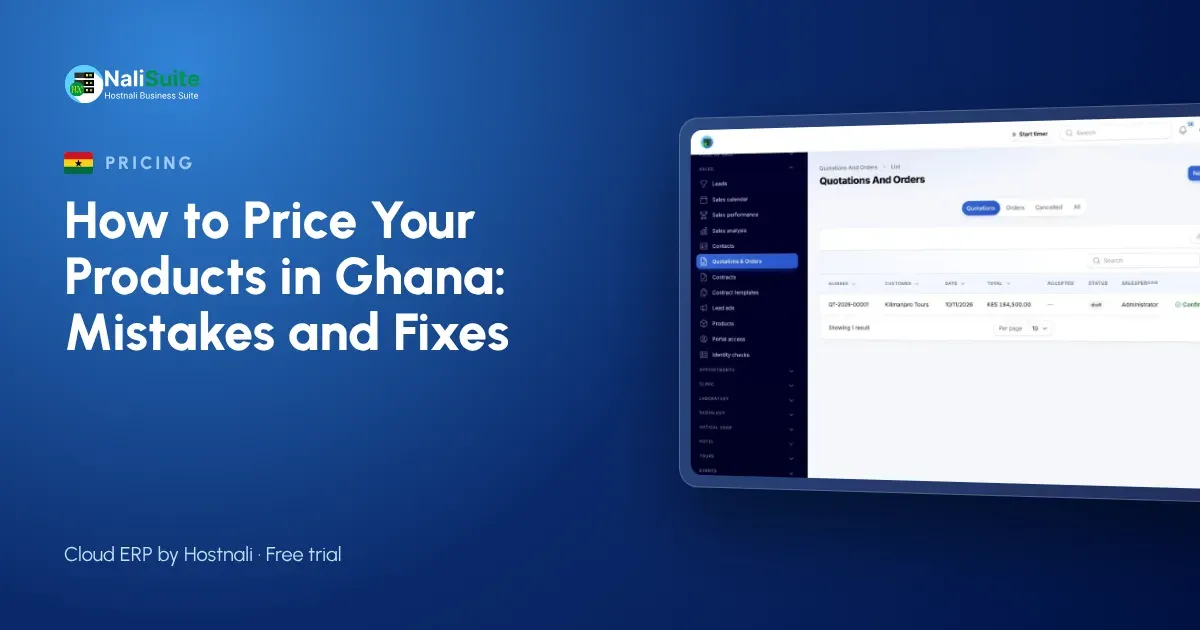
Most pricing mistakes happen in a hurry: a WhatsApp message, a phone call, a customer at the counter. Ready price lists and quotation templates take the guesswork out. In NaliSuite you build a quotation from your product list, prices and taxes fill in, and the customer can accept it online. When it becomes an invoice, nothing is retyped.
Check bundles carefully
Bundles move stock, but add up each item’s cost first so the bundle price still clears your floor.
Frequently asked questions
How do I handle customers who always ask for a discount?
Know your lowest price, and offer value instead of a cut: delivery, a bundle or a bigger quantity at a better rate.
Should I price in cedis or dollars?
Price in cedis for local customers. If your costs are in dollars, review prices more often so exchange rate moves do not eat your margin.
How do I know if a product is worth keeping?
If you cannot sell it above your full cost at a price customers accept, find a cheaper supplier or stop stocking it.
Try NaliSuite
NaliSuite keeps your product costs, price lists and quotations together, so every price you give is one you can afford. Plans start at ₵25 a month, shown in cedis, with a free trial. See the plans.