 GHS
 KES - Kenya
 UGX - Uganda
 TZS - Tanzania
 RWF - Rwanda
 NGN - Nigeria
 ZAR - South Africa
 USD - Zimbabwe
 ETB - Ethiopia
 ZMW - Zambia
 USD - International

In Ghana’s markets, the shop that has the item when the customer asks wins the sale. The shop that buys too much of the wrong thing ties up its cash. Inventory management is about getting that balance right. These tips are written for shops, wholesalers and pharmacies in Accra, Kumasi and beyond.
Use reorder points, not memory
Most stock-outs happen because nobody noticed a line running low until a customer asked for it. Fix that with reorder points: average daily sales times the supplier’s lead time, plus a buffer for delays. Sell 4 units a day with a 7-day lead time? Reorder at around 35.
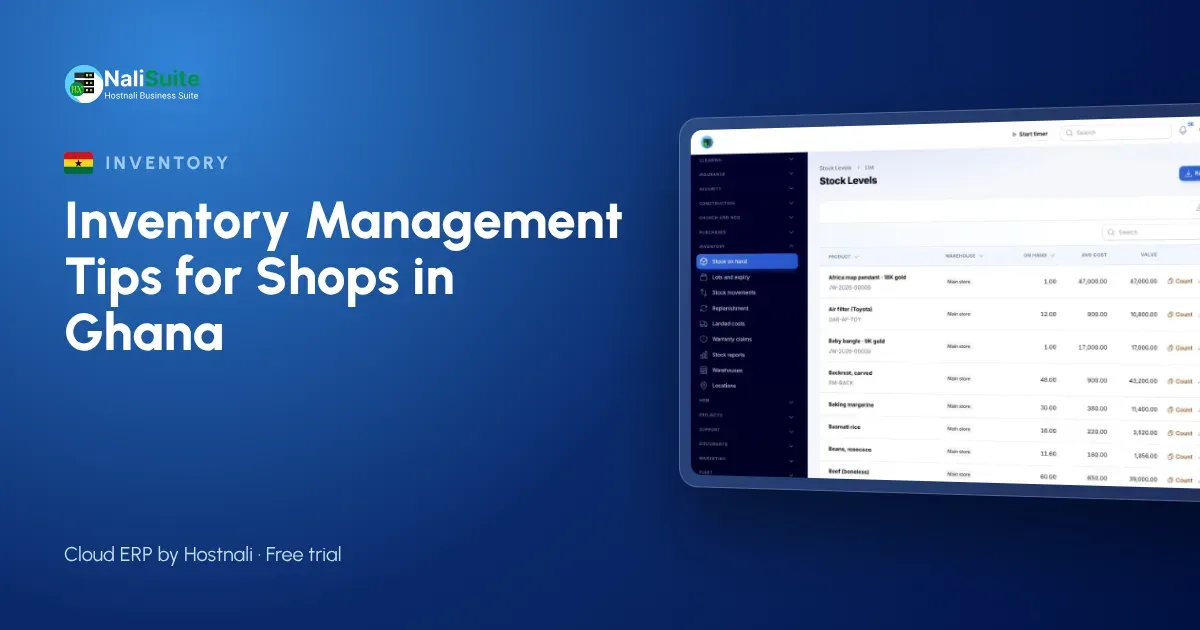
In NaliSuite, inventory can apply reorder rules for you and list what is below its level each day, ready to turn into a purchase order.
What makes stock tricky in Ghana
Many retailers buy from wholesalers in Makola, Kejetia or Tema, often with cash and often in bulk. Prices can change between trips, so knowing your real cost per item matters.
Wholesalers sell on credit to smaller shops, which means stock goes out before payment comes in. Pharmacies and chemical sellers must track batches and expiry. All of that is hard to hold in a notebook once you pass a few hundred items.
Branches, depots and transfers
Running two shops from one stock list is how goods go missing. Instead, treat each shop, warehouse or even a delivery van as a separate location. Transfers between them are recorded like any other movement, and each branch’s reports show its own stock and sales.
Head office still sees the total, so purchasing decisions are based on the whole business.
Example: a wholesaler in Tema
A provisions wholesaler in Tema supplies retailers who pay by MoMo or on credit. Each morning the attendant checks the reorder report: items below their reorder point are listed with the usual supplier and the last price paid. Credit customers’ orders reduce stock immediately and appear on their account, so the owner sees both what is on the shelf and what is owed.
The weekly count now focuses on the 50 items that move fastest, instead of the whole shop.
Spot slow movers and dead stock
Every business has lines that looked like a good idea and now gather dust. A monthly report of items with little or no movement shows them clearly. Clear them with a promotion, bundle them, or return them if your supplier allows, and remove them from future orders.
The cash you free up is often enough to stock more of your best sellers.
Mistakes Ghanaian shops can avoid
- Buying on the last trip’s price. Prices change between market trips, so record each purchase price and check margins.
- Credit sales outside the system. A sale written in a separate book never reduces stock, and the count never matches.
- Too many slow lines. A crowded shelf looks busy but ties up cash. Clear slow movers before adding new ones.
- Leaving expiry checks to chance. A monthly expiry report takes minutes and saves money.
Start with an accurate count
Before you can manage stock you need a true starting point. Close early one day or come in on a Sunday, count everything once and record it as opening stock. Barcode labels and a phone scanner make this much faster than a clipboard.
From then on, do not wait for the annual stock-take. Count one aisle or category each week. The aim is not to find every error at once but to find them while they are small.
Getting started in Ghana
List your products with the price you paid, the price you sell at and a barcode where possible. Import the list and count your stock once to set opening levels.
Set reorder points for your fastest sellers, and record the supplier and the usual delivery time for each. If you buy from several wholesalers, record the last price from each so you can compare before you reorder. For customers who buy on credit, make sure each sale goes on their account so stock and money owed match.
Once a month, run a report of slow movers and decide what to clear before you buy more.
Frequently asked questions
Can I track goods sold on credit?
Yes. A sale on account reduces stock immediately and adds to the customer’s balance, so stock and money owed stay in step.
Can I import my existing stock list?
Yes. Import products, prices and opening stock from Excel or CSV.
Can I see stock on my phone?
Yes. NaliSuite runs in the browser on any phone, so you can check stock levels and reorder lists from anywhere.
Try NaliSuite
Ready to get stock under control? NaliSuite inventory with reorder rules, batches and branches is included in every plan from ₵25 a month. Start a free trial.