 GHS
 KES - Kenya
 UGX - Uganda
 TZS - Tanzania
 RWF - Rwanda
 NGN - Nigeria
 ZAR - South Africa
 USD - Zimbabwe
 ETB - Ethiopia
 ZMW - Zambia
 USD - International

A Ghanaian events company, a small engineering firm and a training consultancy look very different, but they share one headache: several projects running at once with the same few people. When the plan lives in a group chat, someone always misses the message that mattered.
This article follows a single project through four phases, plan, run, check and bill, and shows what a small team needs at each step.
The example: a wedding in Aburi
An events company in East Legon, Accra, has seven permanent staff and a list of freelance decorators and caterers. In one month it is handling a corporate end-of-year party in Airport City, a church anniversary in Kumasi and a wedding at a venue in Aburi.
We will follow the wedding.
Phase 1: plan
The owner creates the wedding as a project in NaliSuite Projects from the company’s wedding template. The template already lists the usual tasks: venue booking, tasting with the couple, decor concept, invitations, transport, rehearsal, setting up on the day and clearing the venue.
What happens in this phase:
- Every task gets one owner. The decor lead owns the decor concept; the coordinator owns transport.
- Every task gets a date, worked back from the wedding day.
- Checklists sit inside tasks. “Set up on the day” includes chairs, sound check, lighting and a final walk-through.
- The billing plan is agreed: a deposit at booking, a second payment a month before, the balance a week before.
The timeline view shows that the decor lead also has the corporate party set-up that same week, which is the kind of clash that used to appear only on the day.
Phase 2: run
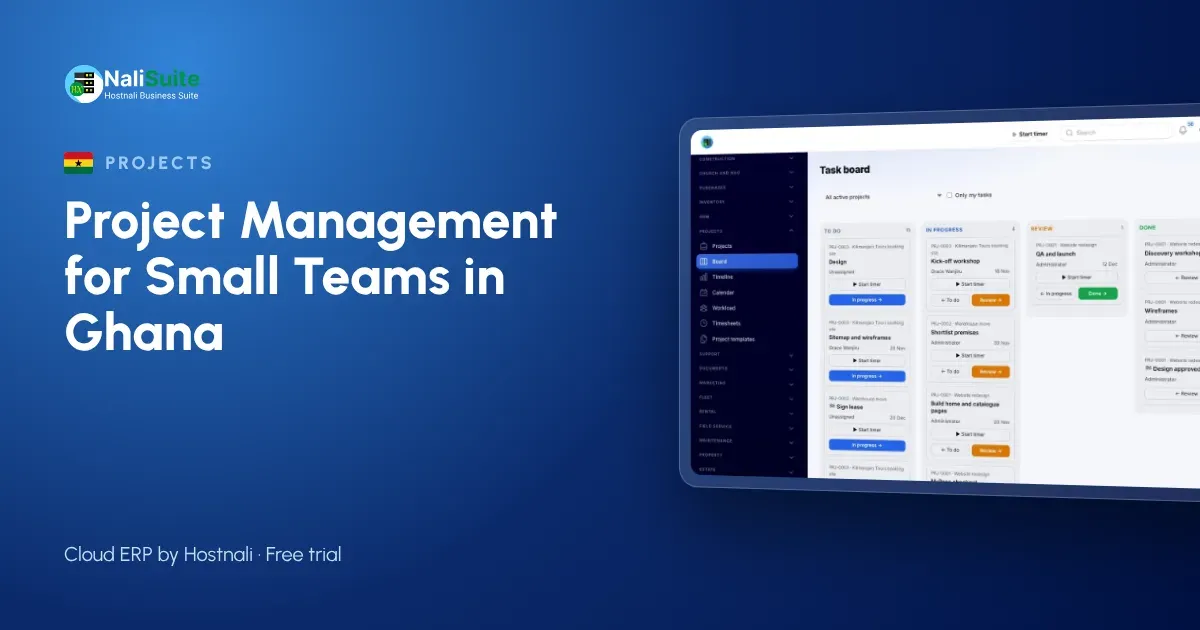
Day to day, the team works from the board: To do, In progress, Waiting for couple, Done. The Waiting for couple column is the important one. It shows at a glance which decisions are stuck with the client, so the coordinator can follow up before the delay becomes the company’s problem.
Staff log time against tasks from a timer or timesheet. Freelancers are handled as costs on the project, while permanent staff log hours so the owner knows how much of the team’s month the wedding really took.
Phase 3: check
Every Monday the owner spends half an hour on three questions:
- Which tasks are late or due this week?
- Who is overbooked across all three events?
- Which client decisions are we waiting for?
The workload view answers the second question in seconds. In our example it shows that the coordinator is carrying both the wedding and the Kumasi anniversary in the same fortnight, so a colleague takes over the Kumasi transport tasks.
The couple can follow progress in the customer portal and download the decor mood board and the final programme, which cuts down the late-night calls before a big day.
Phase 4: bill
Each of the three payments is raised from NaliSuite Invoicing when it falls due. Invoices carry a pay option so the couple can pay by MTN MoMo or card, with mobile money payments recorded against the invoice when they arrive.
Two weeks before the wedding the couple asks for an extra after-party set-up. The time and extra items are added to the project and appear on the final invoice, rather than being done as a favour that nobody charged for.
After the event, profitability compares what was billed with the cost of the time logged. Over a season, the owner can see which kinds of event pay well and which ones need a higher quote.
Mistakes small teams make
- Planning in the chat. Keep WhatsApp for quick messages, but put tasks and dates in the project.
- No owner for client decisions. Someone must be responsible for chasing the client.
- Skipping timesheets. Without time, you cannot bill extra work or know your real margin.
- One giant project. Split big jobs into deliverables; it makes progress easier to see.
- Never updating the template. If every wedding needs a sound check task, add it once.
Personal data
Guest lists, phone numbers and staff details are personal data under Ghana’s Data Protection Act, 2012 (Act 843). Store them in the project rather than in personal phones, and give access only to the people who need it.
Working with freelancers and suppliers
Ghanaian events depend on outside help: decorators, caterers, DJs and canopy hire. Keep a task for every supplier booking with the agreed date and a note of what was confirmed, so nobody relies on a phone call from three weeks ago. When a supplier is late, the coordinator sees which tasks depend on them and can act early.
Frequently asked questions
Can freelancers use the project too?
You can add tasks for freelance work and track their costs on the project. Give system access only to people who need to update tasks.
Can the client pay a deposit by mobile money?
Yes. Invoices include a pay option, so clients can pay by MTN MoMo or card and the payment is recorded against the invoice.
Does this work for non-event businesses?
Yes. The same plan, run, check and bill cycle suits contractors, consultants, IT installers and training firms.
Try NaliSuite
Projects, Invoicing and the customer portal are included in every NaliSuite plan, from ₵25 a month. Look at the plans and try your next event or client job in a free trial.