 GHS
 KES - Kenya
 UGX - Uganda
 TZS - Tanzania
 RWF - Rwanda
 NGN - Nigeria
 ZAR - South Africa
 USD - Zimbabwe
 ETB - Ethiopia
 ZMW - Zambia
 USD - International

Rent in East Legon, fees at a private school in Kumasi, a cleaning contract for offices in Tema, a monthly retainer for a design studio in Osu: much of Ghana’s small business income arrives on a schedule. Collecting it reliably is a different job from selling one item at a time.
This guide looks at which businesses benefit from recurring billing, what to set up and how to run it so customers pay on time.
Is your business a recurring one?
Ask yourself: do the same customers pay you the same kind of amount on a regular schedule? If yes, you are a recurring business. Typical examples in Ghana:
| Business | What repeats |
|---|---|
| Landlords and estate managers | Rent, service charges, security levies |
| Private schools and crèches | Termly fees, feeding, transport |
| Gyms, clubs and associations | Monthly or yearly dues |
| Cleaning, security and waste firms | Monthly service contracts |
| IT, accounting and marketing firms | Retainers |
| Water and gas delivery | Weekly or monthly deliveries |
The cost of doing it by hand
Many of these businesses still bill by hand. The owner sends messages at the start of the month, writes payments in a book and calls whoever has not paid. It works, until it doesn’t:
- a busy month means invoices go out on the 10th instead of the 1st;
- MoMo payments arrive from a number nobody recognises;
- a customer insists they paid, and there is no record to check;
- the owner cannot say how much is outstanding without going through every page.
What recurring billing software does
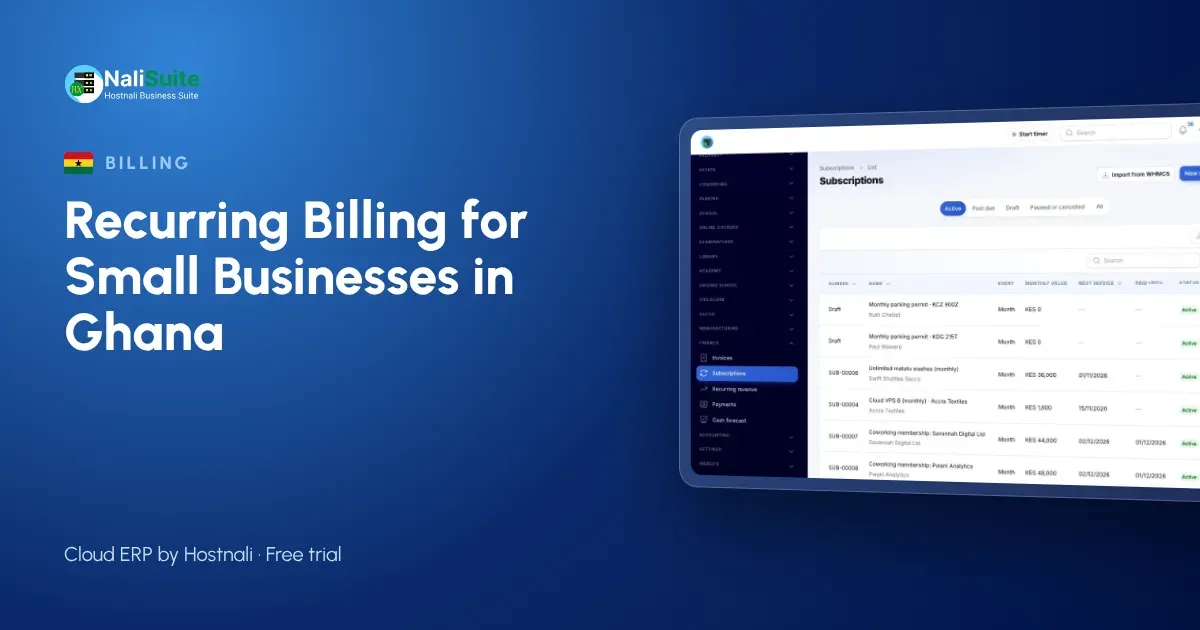
You create a subscription once for each customer, with the amount, the period (weekly, monthly, quarterly, yearly) and the start date. After that, invoices are created and sent automatically on schedule, each with a link to pay.
NaliSuite Subscriptions works this way. Invoices are sent by email or WhatsApp with a link to pay by MTN MoMo or card, and when the customer pays, the payment is matched to the invoice. The mobile money payments feature explains the matching.
Setting up recurring billing
Gather your customer list
For each customer, record their name, phone number, email if they have one, what they pay for, the amount and how often.
Create plans
Plans group customers who pay for the same thing, such as “Two-bedroom flat, monthly” or “Primary school fees, termly”. When a price changes, you change the plan rather than each customer.
Decide billing and due dates
Rent is often billed on the 1st and due within a few days. School fees are billed before the start of term. Memberships might bill on each member’s joining date.
Plan your reminders
Agree on a reminder schedule and stick to it: a gentle reminder before the due date, one on the day and a firmer one a week later. NaliSuite Invoicing sends these automatically.
Give customers a portal
In the customer portal, customers can see every invoice and payment and pay what is due. If you allow it, they can also pause, upgrade or cancel. That cuts down the “please send me my statement” messages.
Handling real-life changes
- A tenant moves units mid-month: the subscription changes and the difference is worked out for the rest of the period.
- A member travels for two months: pause the subscription with a clear restart date.
- A school adds a new fee: add it to the plan from the next term.
Taxes
If your business is VAT-registered, each recurring invoice must show the right VAT and levies. Because these rates have changed in Ghana, confirm the current figures with GRA and update your plans whenever they change. Residential rent and school fees may be treated differently from other services; ask your accountant how your income should be taxed.
Know your numbers
Recurring businesses should watch a few figures every month:
- Recurring revenue: how much your subscriptions bring in each month.
- New and lost customers: are you growing?
- Churn: what share of customers leave each month?
NaliSuite shows these on a dashboard, so you see a problem before it shows up in the bank balance.
Example: an estate in Tema
An estate manager handling 60 flats in Tema used to send rent reminders by hand on WhatsApp and record MoMo payments in a spreadsheet. Tenants often paid late because reminders went out late. With automatic invoices on the 1st and pay links, most tenants paid within the first week. The manager also had a clear record for every unit, which settled two disputes in minutes.
Frequently asked questions
Can tenants pay part of the rent?
Yes. The part payment is recorded against the invoice and the balance stays open.
Can I bill in advance for a whole term?
Yes. Set a termly or yearly period, and the invoice is created once for the whole period.
What if a customer stops paying?
Reminders go out automatically. If they still do not pay, you decide whether to pause the service or agree a payment plan.
Can I see all outstanding balances at once?
Yes. NaliSuite shows what every customer owes and how late each balance is.
Try NaliSuite
NaliSuite bills your recurring customers automatically and collects by MTN MoMo or card. Plans start at ₵25 a month with a free trial; see the plans or read more about NaliSuite.