 ZMW
 KES - Kenya
 UGX - Uganda
 TZS - Tanzania
 RWF - Rwanda
 NGN - Nigeria
 ZAR - South Africa
 USD - Zimbabwe
 GHS - Ghana
 ETB - Ethiopia
 USD - International

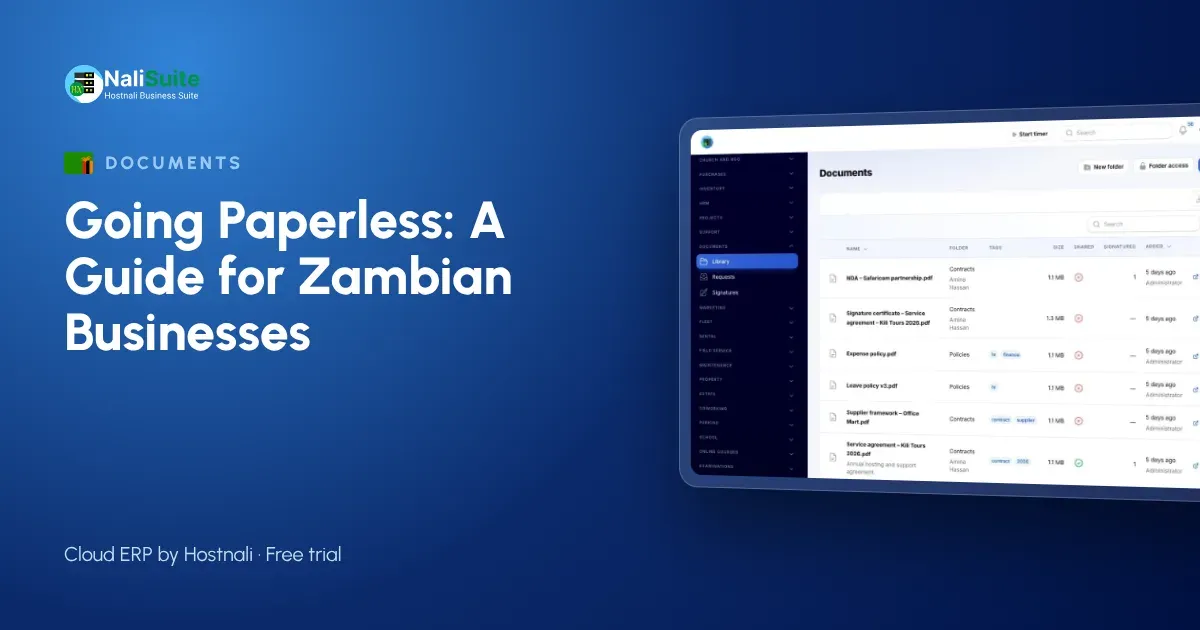
Paperwork in a Zambian business tends to grow quietly. A receipt book here, a credit ledger there, a drawer of supplier slips, a box of staff files. Nobody decides to run the business on paper; it just happens. Getting out of it works best with a simple rule for every type of document: stop it, switch it, or scan it.
This article applies that rule to an agro-dealer in Chipata, Eastern Province.
The example: an agro-dealer in Chipata
The business sells seed, fertiliser, chemicals and small equipment to farmers and to a few cooperatives around Chipata, Katete and Petauke. It has a shop, a store and seven staff. In the planting season, the counter is packed from opening to close.
Its paperwork before the change:
- duplicate receipt books for cash sales;
- a credit book for farmers and cooperatives who pay after harvest;
- supplier invoices and delivery notes in a box file;
- agreements with cooperatives printed and signed in the office;
- staff attendance and leave on paper.
Stop: paperwork you no longer need to create
Some paper only exists because there was no alternative. Stop creating it.
Receipt books
Every sale and payment is recorded in the system instead. Invoices and receipts are sent by WhatsApp or email from NaliSuite Invoicing, and customers can pay by MTN MoMo, Airtel Money or card. Mobile money payments are recorded against the invoice, so the payment record is the receipt.
For walk-in sales at the counter, NaliSuite Point of Sale records each sale and keeps selling even when the connection drops.
The credit book
Farmers who buy on credit get an invoice with a due date. The dealer sees who owes what, and the farmer can see their own invoices in the customer portal. No more pages torn from the credit book.
Attendance and leave sheets
With employee self-service, staff check in from their phones, apply for leave and download payslips from the employee app, which installs from the browser.
Switch: paperwork that must exist, but can be digital
Some documents are needed, but do not need to be paper.
Agreements with cooperatives
Supply agreements are sent for e-signature from NaliSuite Documents. The cooperative’s chairperson signs on a phone, and the dealer receives a stamped PDF with an audit certificate showing who signed, when and from where.
Each signature is recorded with that certificate, which supports its validity. Some documents may still need a particular form of signature or a witness, so check the rules for your type of document in Zambia and keep any originals that are required.
Purchase orders
Orders to fertiliser and seed suppliers are raised in NaliSuite Purchases and emailed from the system. When goods arrive, they are received into stock against the order, and the supplier’s bill is checked against both.
Requests for documents
When a cooperative needs to send its registration papers or a list of members, the dealer sends a document request, and the files arrive through a secure link or the customer portal.
Scan: paper that still arrives
Some paper keeps coming: supplier invoices, delivery notes and the odd handwritten note.
- Photograph supplier invoices and receipts on arrival. With the Document AI add-on, they are read and turned into bills or expenses for someone to check. Document AI uses the business’s own Anthropic API key.
- Store delivery notes in the supplier’s folder in Documents, tagged delivery and the season.
- Scan old records only when you need them. Box and label the rest by year.
Keeping it organised
A paperless office needs simple rules that everyone follows:
- Folders: Customers, Suppliers, Staff and Company, with a folder per customer or supplier and a sub-folder per season.
- Tags: agreement, invoice, delivery, receipt, policy.
- Versions: always edit the latest version; earlier ones are kept automatically.
- Access: counter staff see sales, the store sees deliveries, only the owner and the bookkeeper see staff files.
What changed in one season
By harvest time the Chipata dealer could see every farmer’s balance in one list, send reminders by message, and match supplier bills to deliveries without opening a box file. The planting season rush still happened, but the paperwork no longer did.
Personal data
Farmer contacts, cooperative member lists and staff files are personal data under Zambia’s Data Protection Act No. 3 of 2021. Digital files with access control are easier to protect than open shelves, as long as you limit who can see what.
Working with cooperatives
Cooperatives often buy for many members at once, which used to mean long handwritten lists. Now the cooperative sends its order and member list through a document request, the invoice goes to the cooperative’s account, and its officials can see their invoices and payments in the customer portal. Disputes at harvest time are settled from records, not memory.
Frequently asked questions
Can farmers without smartphones still get invoices?
Yes. Invoices can be printed when needed, but every sale still has a digital record.
What if the network drops at the counter?
The point of sale keeps selling offline and syncs when the connection returns.
Can a cooperative sign agreements online?
Yes. Send the agreement for e-signature; it can be signed on a phone.
Try NaliSuite
Documents, Invoicing, Point of Sale and Purchases are included in every NaliSuite plan, from ₵25 a month. Look at the plans and try stop, switch, scan during the free trial.