 ZMW
 KES - Kenya
 UGX - Uganda
 TZS - Tanzania
 RWF - Rwanda
 NGN - Nigeria
 ZAR - South Africa
 USD - Zimbabwe
 GHS - Ghana
 ETB - Ethiopia
 USD - International

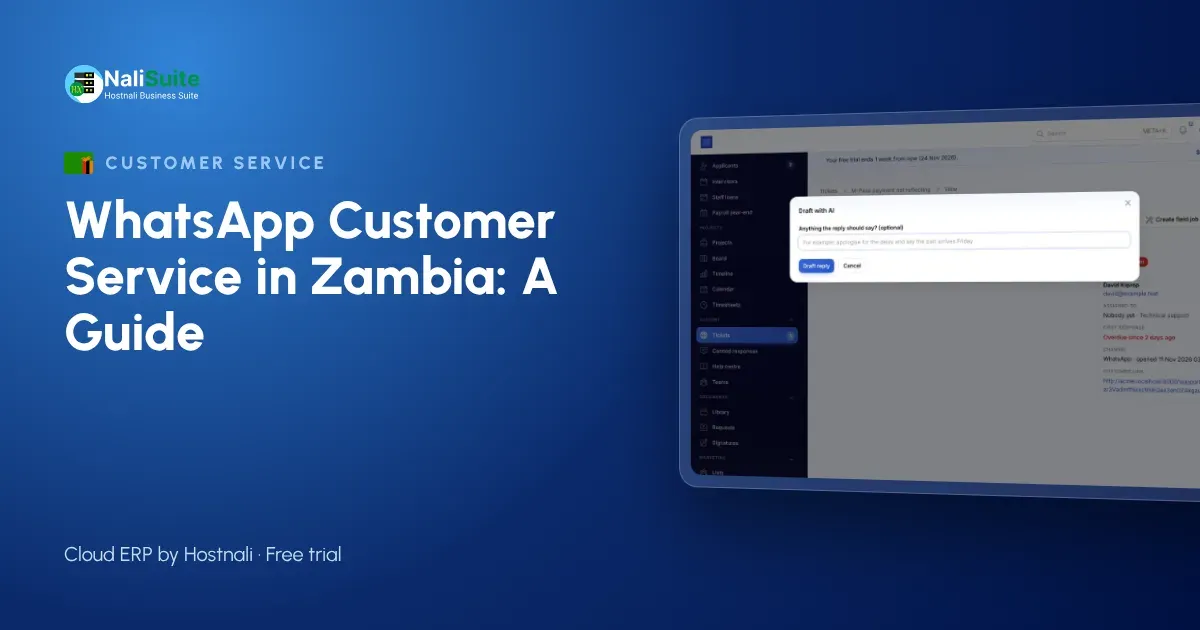
In Zambia, WhatsApp is where customers ask for quotes, send proof of mobile money payments and follow up on deliveries. Small businesses often run it from the owner’s phone. That works until the owner is busy, travelling or asleep, and the customer moves on.
Start with the customer’s side of the chat
A customer in Lusaka who messages you wants three things: a fast first reply, a correct answer and an easy way to buy. Everything else, the inbox, the tickets, the templates, exists to deliver those three.
Imagine a mining supplies company in Kitwe that sells safety boots, gloves and tools to contractors on the Copperbelt. Site managers send orders by WhatsApp voice note, buyers ask for quotes with their company details, and the sales rep in Solwezi answers from his own phone. Quotes are retyped into invoices, and some never get sent.
Decide who answers what
| Type of message | Who handles it | Target first reply |
|---|---|---|
| Price and stock questions | Sales team | 15 minutes |
| Orders and deliveries in Ndola and Kitwe | Shop or dispatch | 30 minutes |
| Payment questions | Accounts | Same day |
| Complaints | Manager | 1 hour |
Step 1: put one business number in front of everyone
Use a single business number for sales and support, and connect it to the WhatsApp Business Cloud API so messages arrive in a shared inbox instead of one handset. In NaliSuite Helpdesk each message becomes a ticket that anyone on the team can open, whether they are in the Ndola branch or working from home.
Step 2: treat every conversation as a ticket
A ticket has an owner, a status and a history. When a customer in Kitwe asks about a delivery, the ticket is assigned to whoever handles deliveries, and it stays open until the question is answered.
- Assign each new chat to a person or team, automatically or by hand.
- Tag it: price question, order, complaint, payment.
- Close it only when the customer has what they needed.
Step 3: agree how fast you reply
Set a simple promise, such as a first reply within 15 minutes during opening hours and by 9am the next day for evening messages. Service levels in the helpdesk show which chats are close to breaking that promise, so a manager in Lusaka can step in before the customer gives up.
Step 4: save quick replies for everyday questions
Opening hours, delivery areas around Livingstone, how to pay and return rules are asked again and again. Saved replies let any staff member answer them correctly in seconds, and AI drafts can suggest an answer from your own help articles for the team to check and send.
Keep it polite and keep it legal
WhatsApp feels informal, but it is still your business speaking. Greet customers by name, confirm what you will do and by when, and never send promotions to people who did not ask for them. Approved templates from Marketing, an easy way to opt out and customer data kept in one business system rather than on staff phones protect your reputation in Zambia.
When a chat turns into a sale, send the quotation from Sales and the invoice from Invoicing in the same thread, with a pay link for mobile money, card or bank transfer. Everything here is described on the WhatsApp feature page.
Common questions from teams getting started
Will customers notice the change? Not in a bad way. They write to the same number; they just get answers faster and from whoever is free, in Lusaka or anywhere else.
What about voice notes and photos? They arrive in the ticket like any other message, so a colleague can listen to a voice note from a customer in Ndola or see a photo of a damaged item without asking for it again.
How do we hand over between shifts? Open tickets stay open with their owner and history. The next shift sees exactly where each conversation stands.
Can managers see how the team is doing? Yes. Reply times and open tickets per person show who needs help, and which questions should become quick replies.
Turning chats into repeat business
Every WhatsApp conversation linked to a customer record builds a history: what they bought, what they asked about, what they complained about. Over time that history lets you follow up at the right moment, for example reminding a customer in Kitwe when a product they asked about is back in stock, or sending an opted-in offer to customers who bought in the last three months. The CRM and contacts apps keep that history in one place.
WhatsApp service in Zambia: what to keep in mind
Zambian business customers usually need a proper quotation and tax invoice with your TPIN before they can pay. Sending those documents straight from the chat, with a pay link for mobile money, card or bank transfer, shortens the time between “send me a quote” and payment.
For Zambian businesses selling to mines and contractors, many WhatsApp requests come with a purchase order number or a site name. Record those on the ticket and the quotation, so invoices match what the buyer’s accounts team expects. That alone shortens the time it takes for a mine to approve payment.
Frequently asked questions
Can WhatsApp quotes become invoices without retyping?
Yes. A quotation sent on WhatsApp can be accepted online and turned into an order and invoice in NaliSuite with the same lines and prices.
Do customers pay with MTN MoMo or Airtel Money?
Through the invoice pay link they can use the mobile money options your payment provider supports, as well as card or bank transfer.
Do I need the WhatsApp Business API?
Yes, to share one number across a team you connect it through the official WhatsApp Business Cloud API. Our team can help a Zambian business set it up.
Can several staff answer at the same time?
Yes. Messages arrive as tickets in the helpdesk, so several people can answer different customers from one number, each with the full history.
Try NaliSuite
NaliSuite brings WhatsApp, helpdesk, sales, invoicing and mobile money into one cloud ERP, from ₵25 a month. Start a free trial from the plans page and connect your business number.