USD
 KES - Kenya
 UGX - Uganda
 TZS - Tanzania
 RWF - Rwanda
 NGN - Nigeria
 ZAR - South Africa
 USD - Zimbabwe
 GHS - Ghana
 ETB - Ethiopia
 ZMW - Zambia

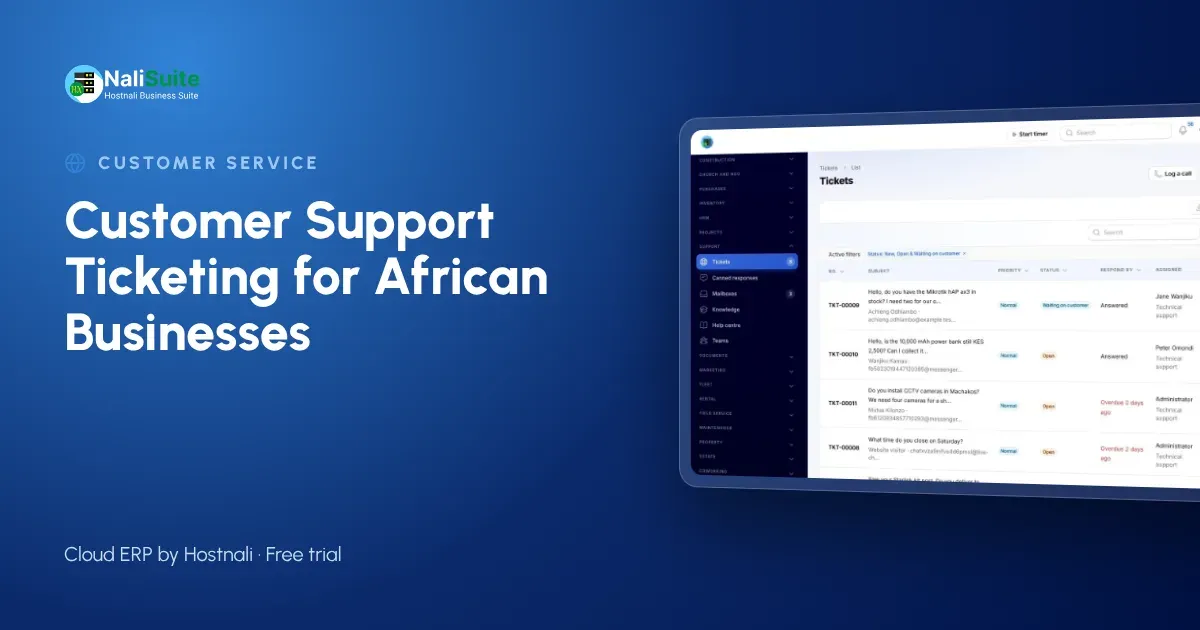
Support grows in stages. At first the founder answers every message personally. Then one hire takes over the inbox. Then a team forms, and customers start arriving from other countries. Each stage needs a little more structure, and businesses that add it too late spend months apologising.
This guide walks through those four stages, using a software company that sells to small businesses in several African countries as the example.
The example business
A software company with its head office in Nairobi sells a booking app to salons, clinics and gyms. It has customers in Kenya, Uganda, Tanzania, Nigeria and Ghana. Customers reach it by email, WhatsApp, live chat on its website, phone and social media.
Stage 1: the founder answers everything
In the first year, the founder replies from a personal phone and the company email. It feels personal and fast, but it does not scale. When the founder travels or is in meetings, customers wait. And the knowledge of what was promised to whom lives in one head.
What to put in place now: a shared inbox in NaliSuite Helpdesk, even if only one person uses it. Every message becomes a ticket with a history. When the first support hire joins, nothing is lost.
Stage 2: the first support hire
With one dedicated person, the priority is consistency.
- Canned replies for the twenty most common questions: logins, adding staff, changing a booking, how billing works.
- Statuses that show what is waiting on the customer and what is waiting on the team.
- A few help articles, published in a public help centre, for the questions that need screenshots or steps.
At this stage, the founder still reads the queue once a day, but no longer answers every ticket.
Stage 3: a support team
With three to six people, the questions become: who does what, and how fast?
- Teams and routing. For example, Onboarding, Technical and Billing, with tickets shared out by round robin.
- Priorities and targets. Helpdesk tracks first-response and resolution targets by priority and escalates tickets that are about to miss them.
- AI drafts. The AI Business Assistant add-on drafts replies from the conversation and your articles, using your own Anthropic API key, for the agent to review and send. See the AI features page.
- Ratings. Ask customers to rate the help they got, and read the low ratings every week.
Stage 4: customers in several countries
Selling across borders adds three new challenges.
Channels differ by country
In Kenya and Tanzania, many customers start on WhatsApp; in Nigeria, Instagram and email are common; in Ghana, phone calls still matter. Helpdesk brings email, web forms, phone, live chat, Facebook Messenger, Instagram and WhatsApp into one inbox, so the team does not need a different tool per market. WhatsApp connects through the WhatsApp Business Cloud API; see the WhatsApp feature.
Working hours and public holidays differ
Set first-reply targets in working hours, and plan rotas around the public holidays of your biggest markets. Tickets wait in the queue with their priority, so the most urgent are seen first in the morning.
Billing questions differ
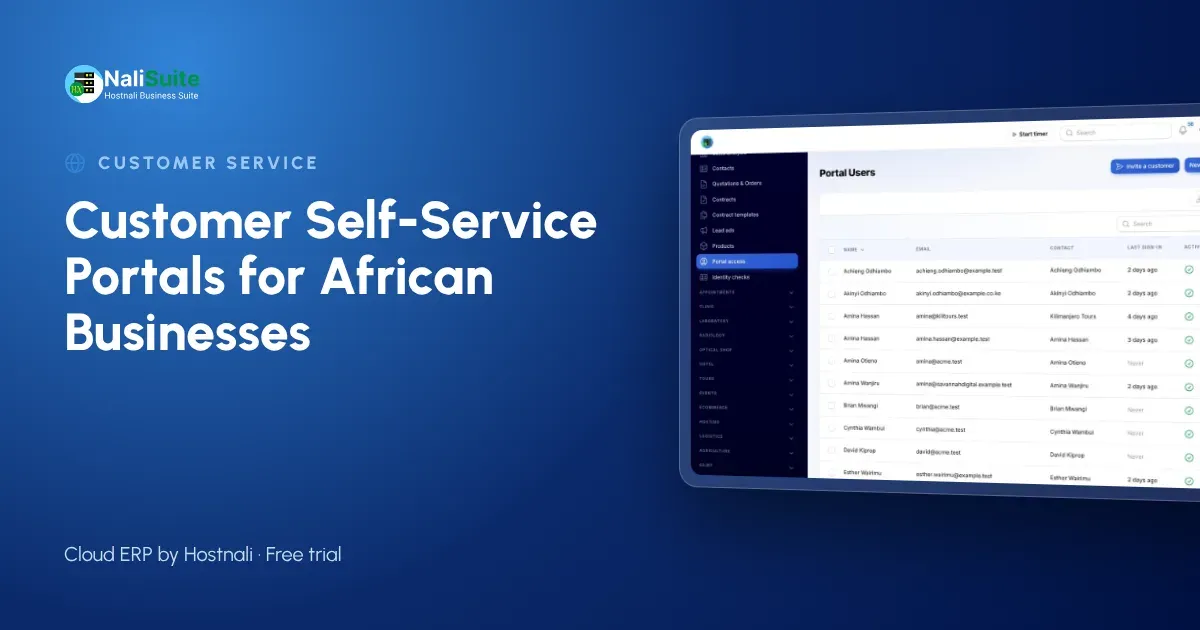
Customers pay in different ways: card in some markets, mobile money such as M-Pesa, MTN MoMo or Airtel Money in others. When invoices are raised in NaliSuite Invoicing and payments come through mobile money payments or card, they are recorded against the invoice, so billing tickets are answered from the facts. In the customer portal, customers see their invoices, pay outstanding ones and follow their own tickets.
Self-service at every stage
The cheapest ticket is the one that never needs writing. A knowledge base in a public help centre and the customer portal answers common questions any time, in any time zone. Write articles in the language your customers use, and update them whenever the same question appears three times in a week.
Measuring support across markets
- Tickets per country and per channel.
- Time to first reply and tickets that broke targets.
- Ratings by country, which often reveal a market where the product or the onboarding needs work.
Our example company noticed that most tickets from one new market came in the first week after sign-up, and added a short onboarding call for new customers there.
Data protection in each country
Tickets contain personal data, and each country has its own law, such as Kenya’s Data Protection Act, Nigeria’s Data Protection Act or South Africa’s POPIA. Keep customer data in the helpdesk, give agents access to what their team needs, and check the rules that apply in each market you serve.
Hiring support staff in new markets
When a market grows, a local support person often helps more than a bigger head-office team. They know the channels, payment habits and public holidays, and customers can speak to someone who understands their context. Give them the same queue, canned replies and targets as everyone else, so support stays consistent across countries.
Frequently asked questions
When should a small business start using tickets?
As soon as more than one person answers customers, or as soon as messages start to be missed. Starting early is easier than moving later.
Can one team support customers in several countries?
Yes. All channels arrive in one inbox, and you can route tickets to teams by topic or market.
Can customers find answers without contacting us?
Yes. Publish articles in a public help centre and in the customer portal.
Try NaliSuite
Helpdesk, Invoicing and the customer portal are included in every NaliSuite plan, from $2.10 a month. Compare the plans and move your support inbox in during the free trial.