USD
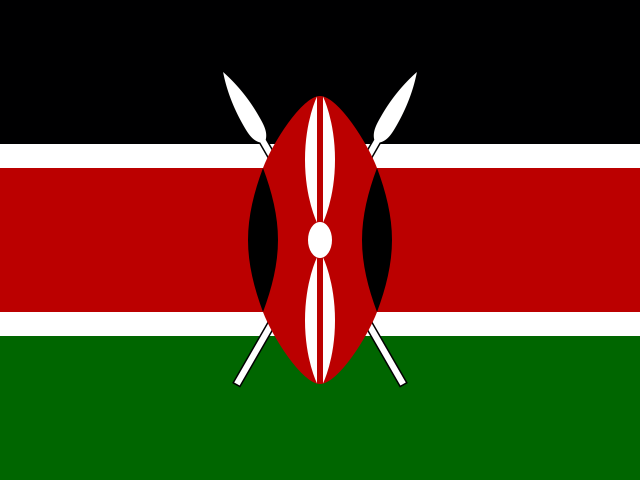 KES - Kenya
 UGX - Uganda
 TZS - Tanzania
 RWF - Rwanda
 NGN - Nigeria
 ZAR - South Africa
 USD - Zimbabwe
 GHS - Ghana
 ETB - Ethiopia
 ZMW - Zambia
African small businesses increasingly sell beyond their home city. A design studio in Accra works for clients in Lagos and London, an agricultural supplier in Nairobi sells into Uganda and Tanzania, and an online shop in Johannesburg ships to Botswana and Namibia. Social media helps them reach people. Email helps them keep those people, across borders and platforms.
This guide looks at email marketing from that wider angle: how habits and laws differ between markets, how to organise a list that spans several countries, and how to measure what each market responds to.
Why email matters more when you sell across borders
When customers are spread across countries, you lose many of the things that keep local customers loyal: chance meetings, a shop window, word of mouth in the neighbourhood. Email fills part of that gap.
- It works everywhere. Email does not depend on which social network is popular in a given country.
- You own the list. Platform changes or account problems do not cut you off.
- It carries detail. Prices in the right currency, delivery terms, specifications and documents.
Channel habits differ by market
Email rarely works alone. Customers in different markets lean on different channels for quick messages:
| Market | Common quick channels alongside email |
|---|---|
| Kenya, Tanzania, Uganda, Rwanda | WhatsApp, SMS |
| Nigeria, Ghana | WhatsApp, SMS |
| South Africa | WhatsApp, SMS, in-app messages |
| Ethiopia | Telegram, SMS |
| Francophone West Africa | WhatsApp, SMS |
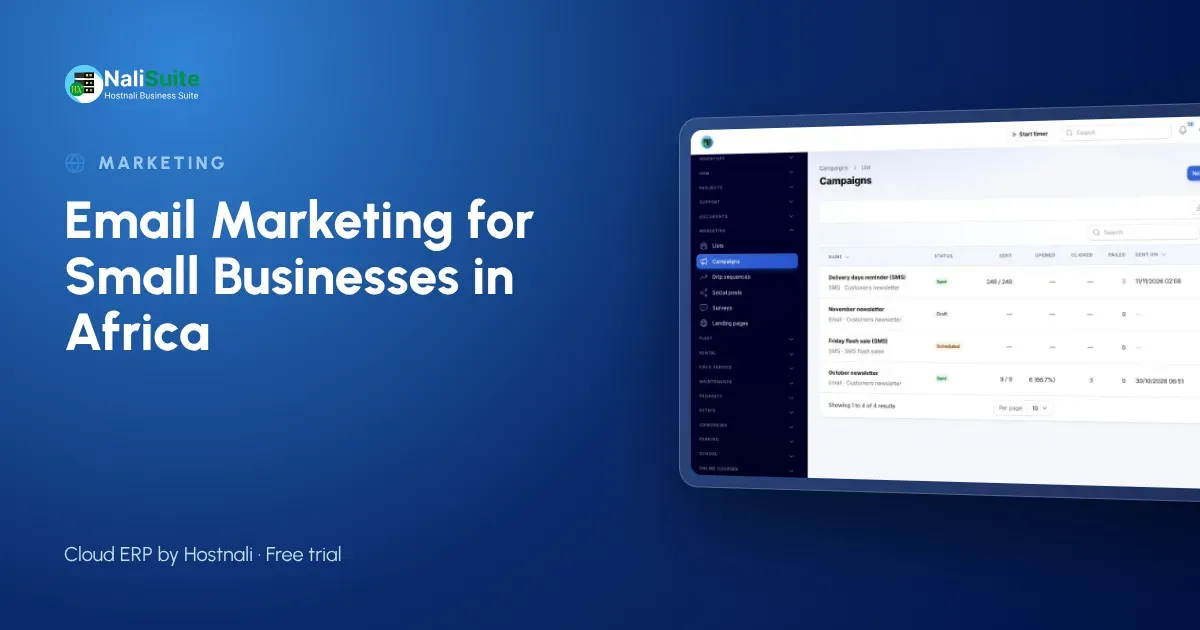
The NaliSuite marketing app sends email campaigns, SMS campaigns through a supported SMS provider, and approved WhatsApp templates to opted-in customers. See WhatsApp in NaliSuite for how the WhatsApp side works.
Consent laws in several countries
Most African countries now have data protection laws that cover marketing lists. Examples include Kenya’s Data Protection Act, 2019, the Nigeria Data Protection Act 2023, South Africa’s POPIA (which has specific rules on electronic direct marketing), Ghana’s Data Protection Act, 2012 (Act 843), Uganda’s Data Protection and Privacy Act, 2019, Tanzania’s Personal Data Protection Act, 2022 and Rwanda’s Law No. 058/2021.
Details differ, but a common set of habits keeps you on the right side of most of them:
- add people to a marketing list only with their consent, and record how and when they gave it;
- explain what you will send and how often;
- include an unsubscribe link in every email (NaliSuite adds one automatically and skips contacts who opt out);
- act quickly on requests to stop or to delete data;
- never buy lists.
Where you have customers in several countries, check the requirements of each, including any registration with a regulator.
Organising a multi-country list
One database, many segments
Keep every customer in one database, such as the NaliSuite contacts app, and tag each contact with their country, preferred language and customer type. Then build segments from those tags:
- by country, so prices, currencies and delivery terms are right;
- by language, for example English, French or Swahili;
- by customer type, such as retailers, distributors and end users;
- by behaviour, such as customers who have not bought in six months.
Currency and payment
Quote prices in the currency each segment buys in, and tell customers how they can pay in their market, such as mobile money where it is common, card or bank transfer.
Time zones
Africa spans several time zones. Schedule each country’s campaign for a sensible local time rather than sending everything at once from head office.
Getting delivered across providers
Customers in different countries use different email providers, and each filters mail its own way. The basics help everywhere:
- send from your own domain, not a free webmail address; Hostnali’s email hosting provides business mailboxes;
- set up SPF, DKIM and DMARC records for the domain;
- email only people who agreed;
- remove bounced addresses.
What to send
A simple monthly rhythm works in any market:
- One useful email, such as a guide, tip or answer to a common question.
- One product, service or offer email, written for the segment’s country and language.
Add a welcome sequence for new subscribers, sent automatically as a drip sequence when someone joins: a welcome, your most popular product or service, and answers to common questions, including delivery and payment in their country.
Measuring by market
Look at results per segment as well as overall. One country may respond to tips, another to offers; one language group may open more on Mondays. With marketing, sales and the CRM sharing the same records in NaliSuite, you can see which contacts in each market clicked and then bought.
Example: a solar equipment distributor
A distributor based in Nairobi sells to installers in Kenya, Uganda and Rwanda. Its list is tagged by country and by type (installer or end customer). Each month installers receive a stock and pricing email in their own currency; end customers receive maintenance tips. A WhatsApp template reminds opted-in installers of new stock. Orders are recorded against each installer, so the team can see which country and which email produced sales.
Frequently asked questions
Do I need a separate list for each country?
No. One database with country and language tags, and segments built from them, is easier to manage.
Which law applies if my customers are in several countries?
Possibly more than one. Follow common good practice and check each country’s specific rules.
Can I send SMS and WhatsApp messages too?
Yes. SMS through a supported SMS provider and WhatsApp templates to opted-in customers.
Is the marketing app included?
Yes. It is built in to every NaliSuite plan, from $2.10 a month.
Try NaliSuite
Run email, SMS and WhatsApp campaigns for every market you serve from one customer database. See the NaliSuite plans and start a free trial.