USD
 KES - Kenya
 UGX - Uganda
 TZS - Tanzania
 RWF - Rwanda
 NGN - Nigeria
 ZAR - South Africa
 USD - Zimbabwe
 GHS - Ghana
 ETB - Ethiopia
 ZMW - Zambia

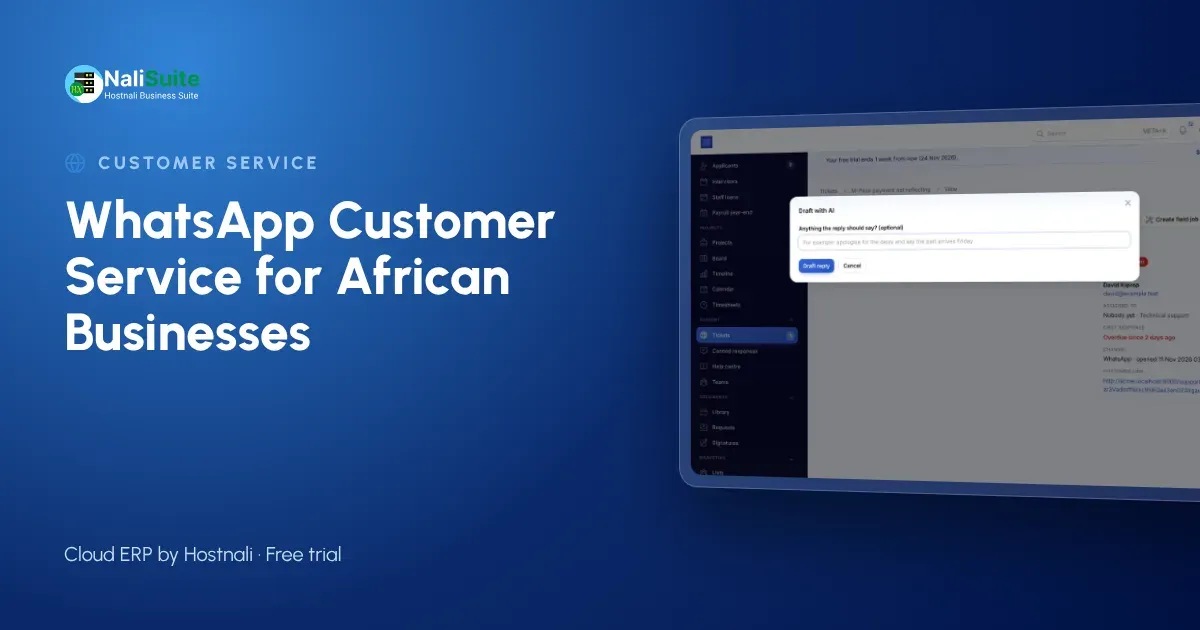
From Lagos to Nairobi, WhatsApp is where customers ask, order and complain. It is free for them, it works on cheap phones and it feels personal. For the business on the other side, though, a busy WhatsApp number can turn into a pile of unanswered chats spread across several phones.
The trouble with one shared phone
Picture a travel agency with offices in Kampala and Nairobi. One WhatsApp number is printed on every flyer, two agents in each office share it on a tablet, and quotes are typed out as long messages. A customer who asks about a Zanzibar package on Monday gets three different prices by Wednesday.
The problem is not WhatsApp. It is that the conversations live on a device instead of in the business. Fixing that is mostly a matter of setup and habits, and it does not need a big team.
What good WhatsApp service looks like across Africa
- Every message gets a first reply quickly, even when the usual person is off.
- Any staff member can see the full history before answering, from Nairobi or Lagos.
- Prices, stock answers and delivery promises are the same whoever replies.
- The customer can order and pay without leaving the chat, by mobile money, card or bank transfer.
- Marketing messages go only to people who asked for them.
Step 1: put one business number in front of everyone
Use a single business number for sales and support, and connect it to the WhatsApp Business Cloud API so messages arrive in a shared inbox instead of one handset. In NaliSuite Helpdesk each message becomes a ticket that anyone on the team can open, whether they are in the Lagos branch or working from home.
Step 2: treat every conversation as a ticket
A ticket has an owner, a status and a history. When a customer in Accra asks about a delivery, the ticket is assigned to whoever handles deliveries, and it stays open until the question is answered.
- Assign each new chat to a person or team, automatically or by hand.
- Tag it: price question, order, complaint, payment.
- Close it only when the customer has what they needed.
Step 3: agree how fast you reply
Set a simple promise, such as a first reply within 15 minutes during opening hours and by 9am the next day for evening messages. Service levels in the helpdesk show which chats are close to breaking that promise, so a manager in Nairobi can step in before the customer gives up.
Step 4: save quick replies for everyday questions
Opening hours, delivery areas around Kampala, how to pay and return rules are asked again and again. Saved replies let any staff member answer them correctly in seconds, and AI drafts can suggest an answer from your own help articles for the team to check and send.
Selling inside the chat
Many WhatsApp conversations are sales waiting to happen. A quotation sent from Sales can be accepted online, turned into an order and invoiced without retyping. The invoice from Invoicing carries a pay link, and the payment is matched to it when the money arrives. That is quicker for a customer in Kampala than visiting the shop, and safer than accepting a screenshot.
For promotions, use approved templates in Marketing and send them only to customers who opted in.
How to tell if it is working
| Measure | What to look for |
|---|---|
| First reply time | Falling, and steady at weekends |
| Open tickets at closing time | Close to zero |
| Repeat questions | Turned into quick replies |
| Paid invoices sent by WhatsApp | A rising share of sales |
Read more on the WhatsApp feature page.
Five habits of teams that answer well
- They greet by name and confirm the next step. “Thanks, Amina, we will deliver to Accra tomorrow before noon” beats “ok”.
- They never leave a chat without an owner. Unassigned tickets are reviewed every hour.
- They write things down once. Answers that come up twice become quick replies.
- They close the loop on payments. When the mobile money or bank payment arrives, the customer gets a receipt in the same chat.
- They look at the numbers weekly. Reply times, open tickets and repeat questions tell them what to fix.
An example week
A small team of four in Nairobi moved its WhatsApp number to a shared inbox on a Monday. By Wednesday the owner noticed that a third of all chats asked the same two questions, about delivery to Lagos and about payment, and turned them into quick replies. By Friday evening messages were assigned to whoever opened the next morning, and no chat waited more than an hour. Nothing about WhatsApp changed for the customers; what changed was that the business could see every conversation.
WhatsApp service across Africa: what to keep in mind
If you serve customers in several African countries, decide which number customers in each country should use, and keep every conversation in one system so your team sees the full history. Invoices sent in the chat can carry a pay link for mobile money, card or bank transfer, depending on what your payment provider supports in each country.
Businesses selling across borders face one extra challenge: time zones and languages. A customer in Accra may write while the team in Nairobi is closing. Assign evening chats to whoever opens first, keep quick replies in English and French if you serve francophone markets, and make sure prices are quoted in the right currency for each customer.
Frequently asked questions
Can one WhatsApp number serve customers in several countries?
Yes. Customers anywhere can write to one business number, and your team answers from the shared inbox. Many businesses still use a local number per country so customers recognise it.
Which payment methods can a WhatsApp invoice take?
That depends on the payment provider you connect: mobile money, card and bank transfer are common. The money goes to your own account.
Do I need the WhatsApp Business API?
Yes, to share one number across a team you connect it through the official WhatsApp Business Cloud API. Our team can help a African business set it up.
Try NaliSuite
NaliSuite brings WhatsApp, helpdesk, sales, invoicing and mobile money into one cloud ERP, from $2.10 a month. Start a free trial from the plans page and connect your business number.